Complete figure library
The book’s logic.
Now in colour.
Every supplied figure and appendix visual is presented here in its finished colour edition. Open a larger view for close study or continue directly to the relevant chapter.
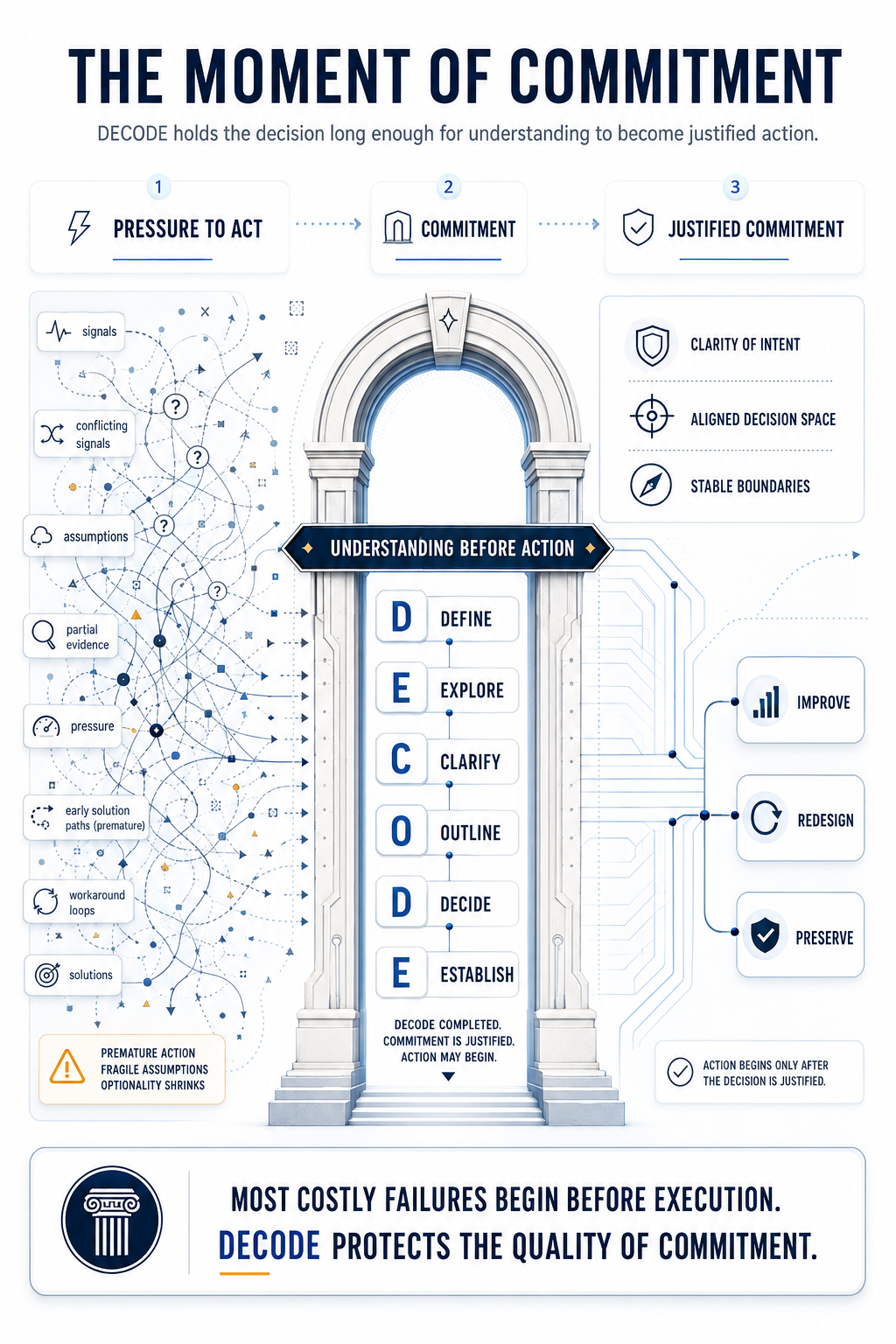
The Moment of Commitment
DECODE holds the decision long enough for understanding to become justified action.
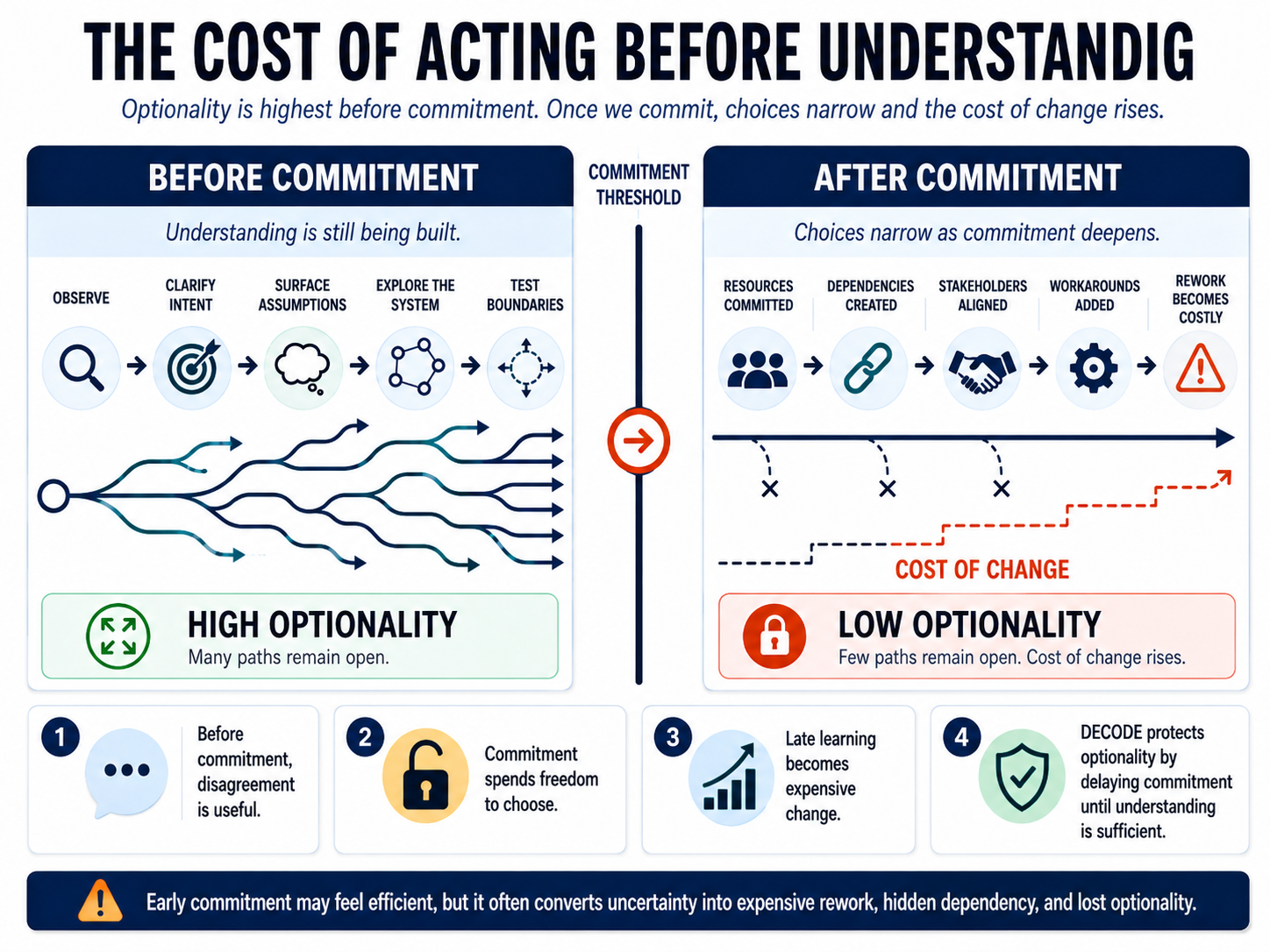
The Cost of Acting Before Understanding
Commitment narrows options and increases the cost of change.

The Hidden Cost of Deciding Too Early
Early choices create dependencies, workarounds, and costly inertia.

Decision Failure Versus Execution Failure
Similar urgency can conceal fundamentally different needs: understanding before commitment or discipline in delivery.
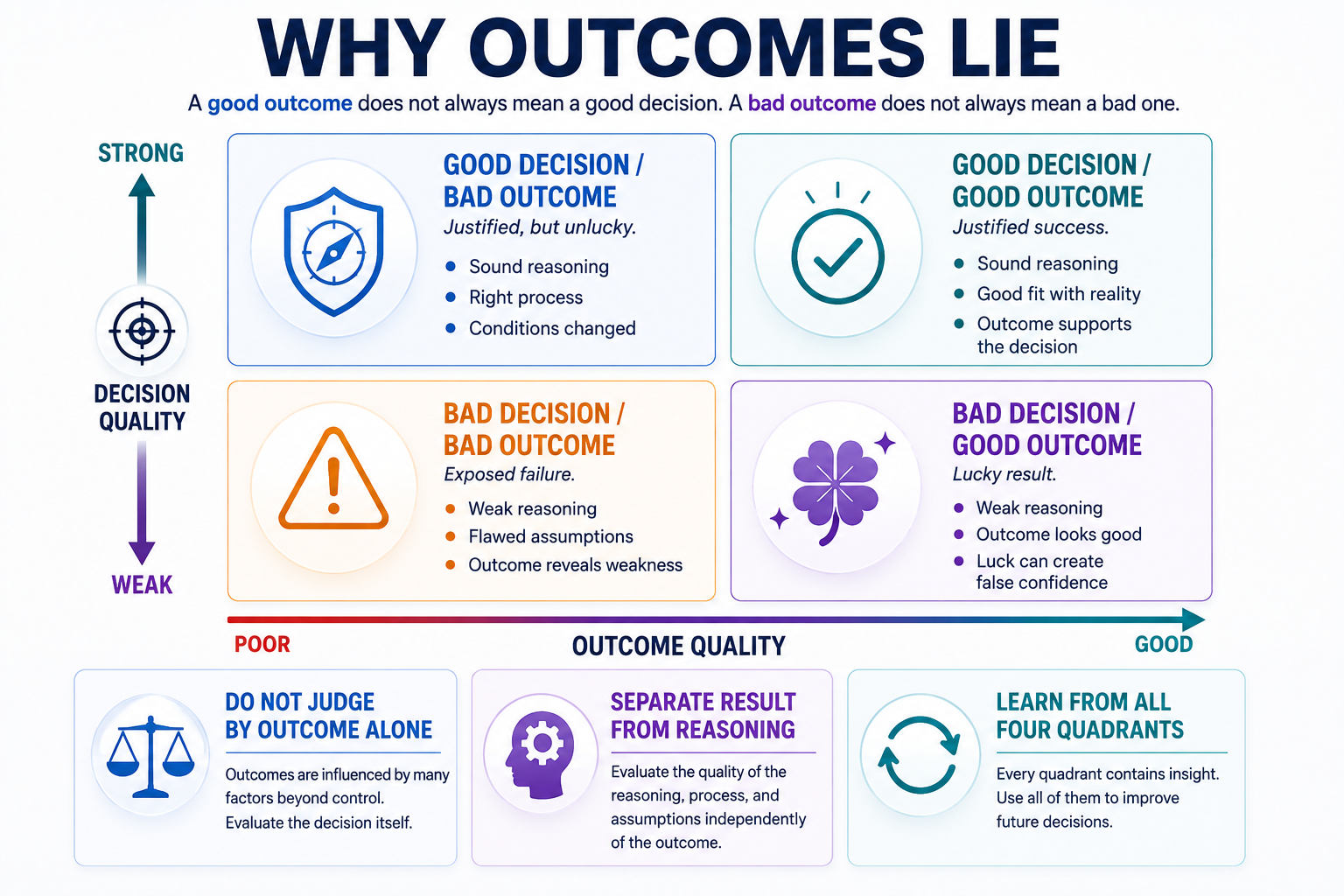
Why Outcomes Lie
Outcomes reflect both decision quality and uncertainty.
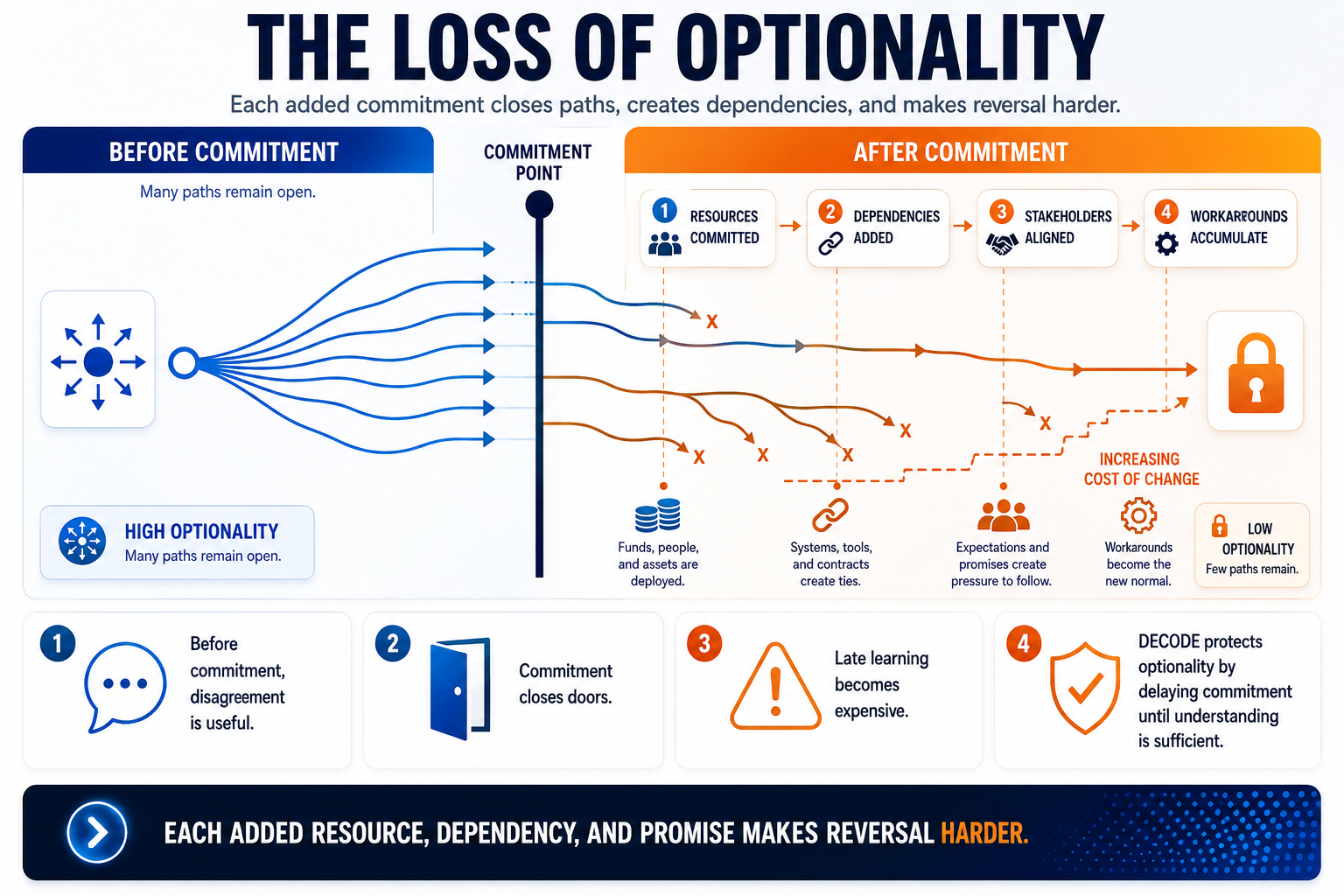
The Loss of Optionality
Each added commitment makes reversal harder.
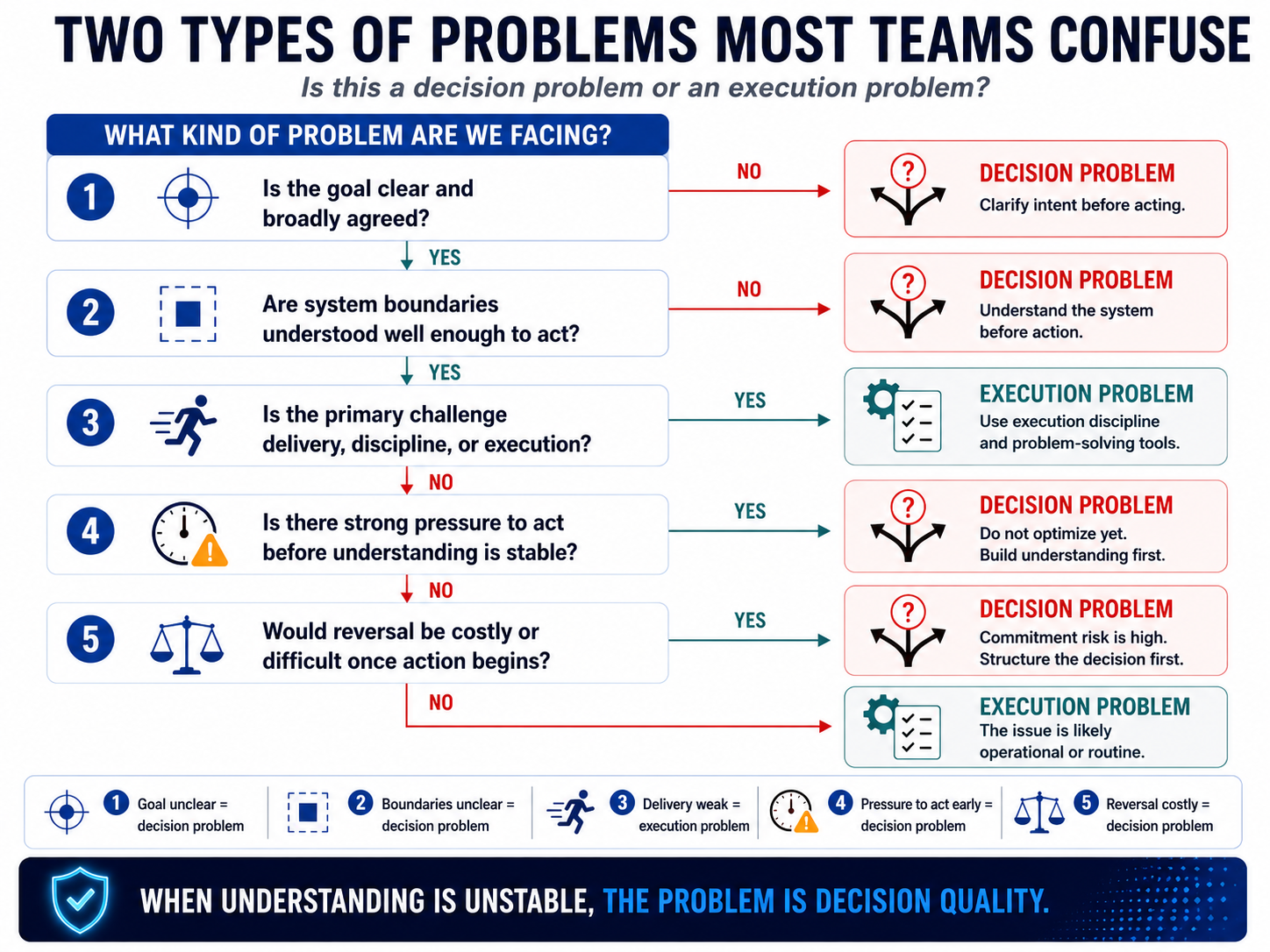
Two Types of Problems Most Teams Confuse
First identify whether the challenge is decision quality or execution.
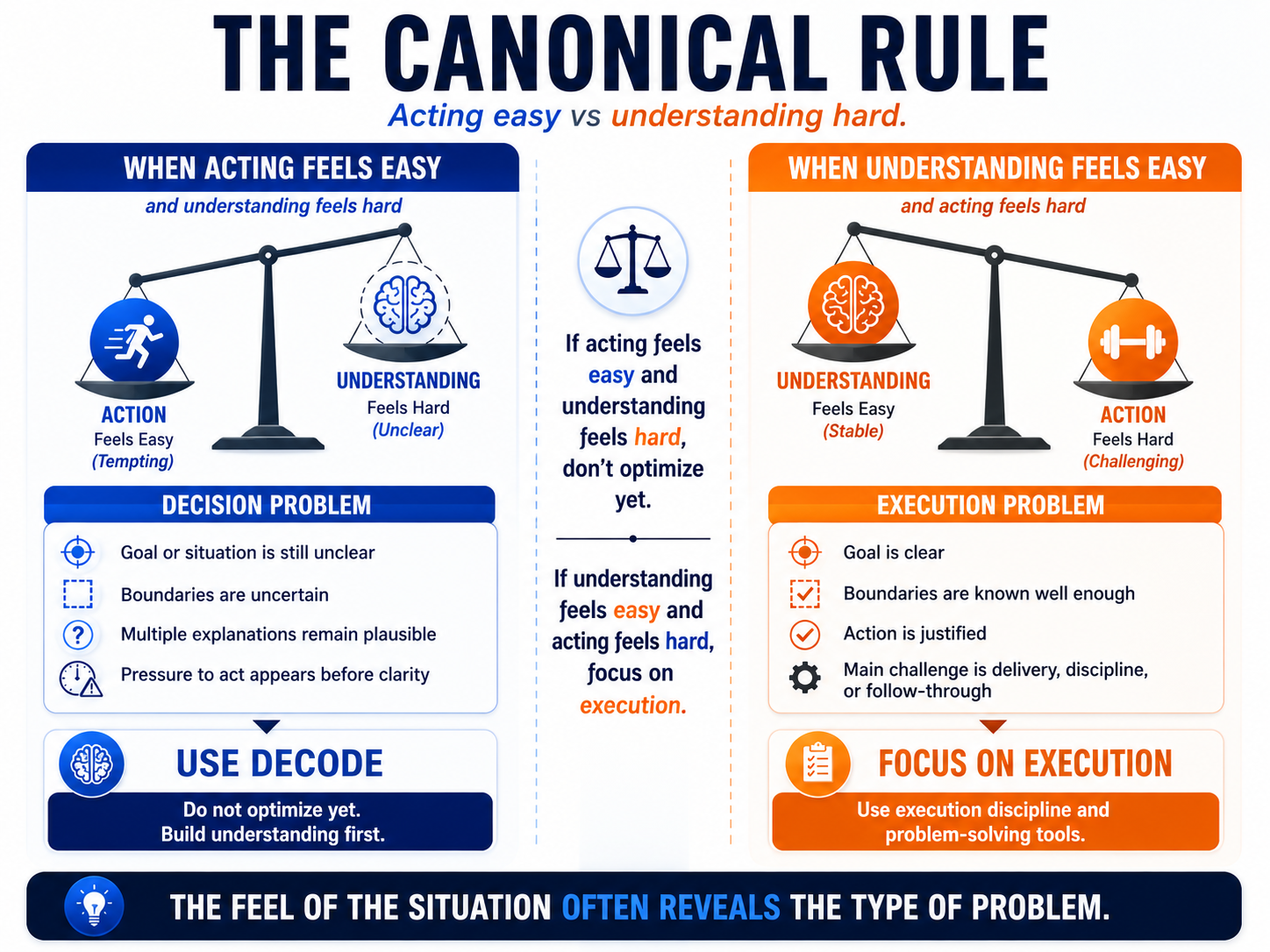
The Canonical Rule
When understanding is hard, use DECODE; when action is hard, focus on execution.

Why Doing Nothing Feels Illegal
Action creates visible activity; understanding protects choice.

Disciplined Non-Action
Preserve combines observation, targeted learning, revisit conditions, and accountability.
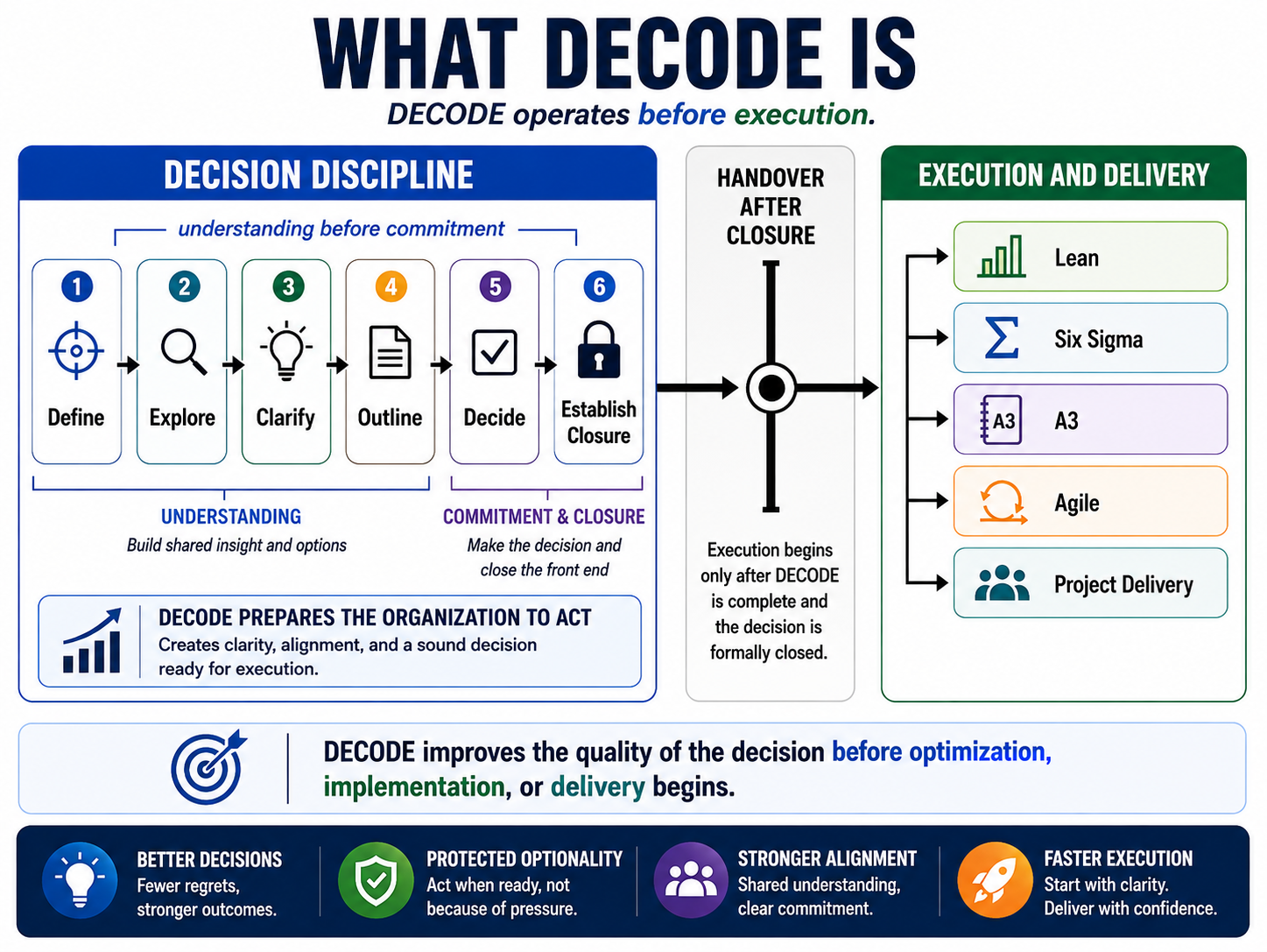
What DECODE Is
DECODE structures the decision before execution methods begin.
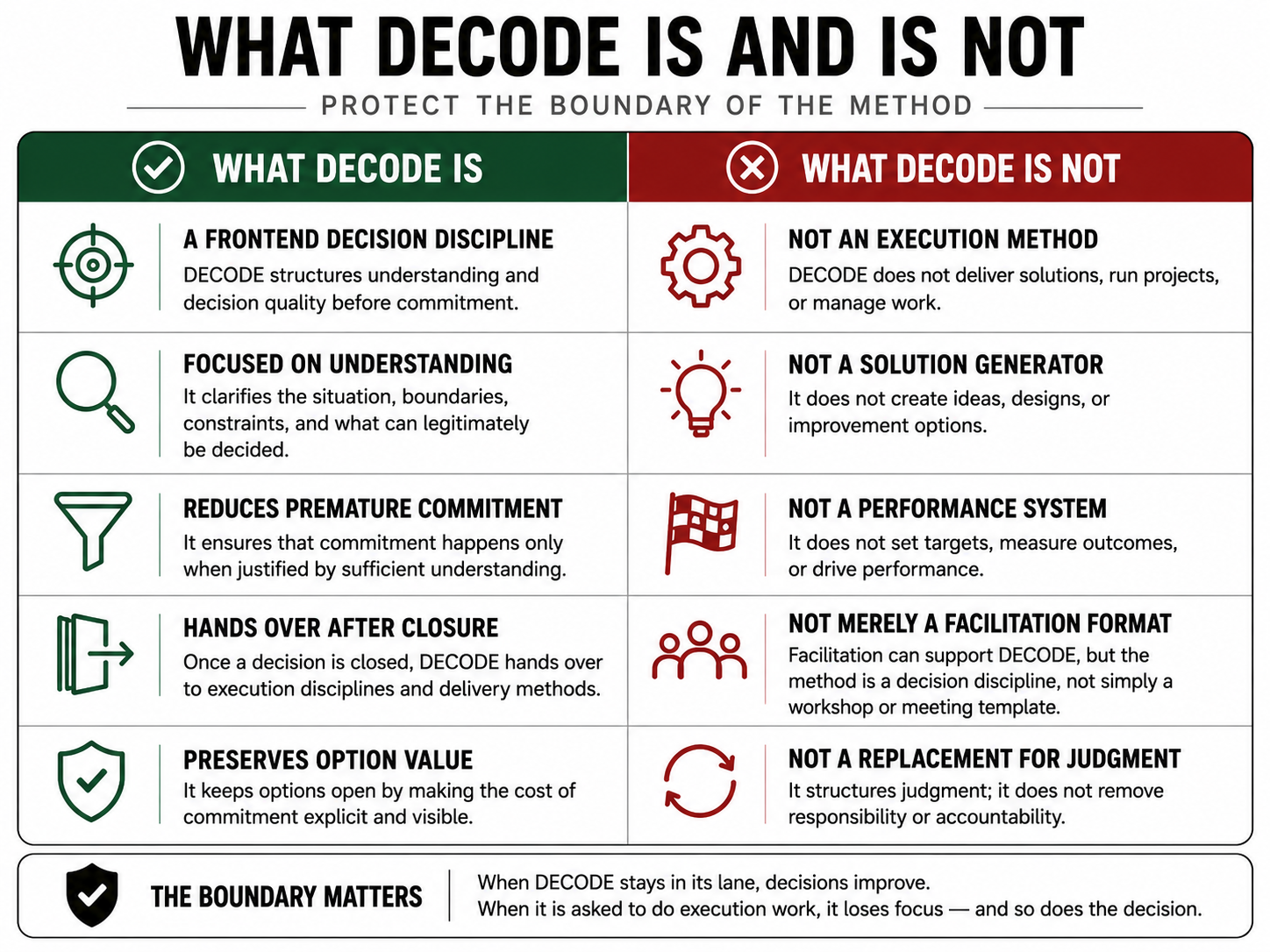
What DECODE Is and Is Not
DECODE protects decision quality without replacing execution, solutions, or judgment.
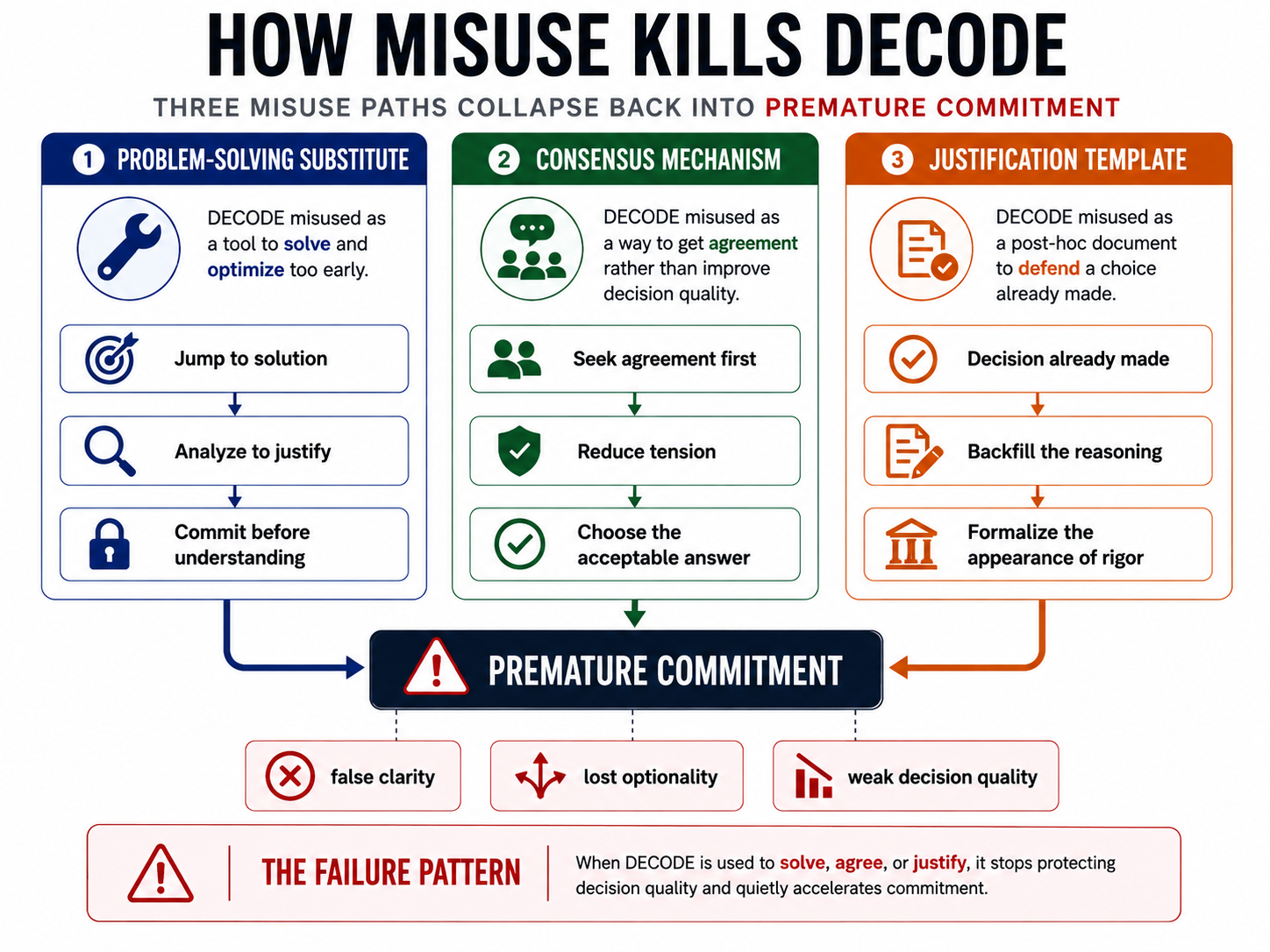
How Misuse Kills DECODE
Using DECODE to solve, align, or justify leads back to premature commitment.
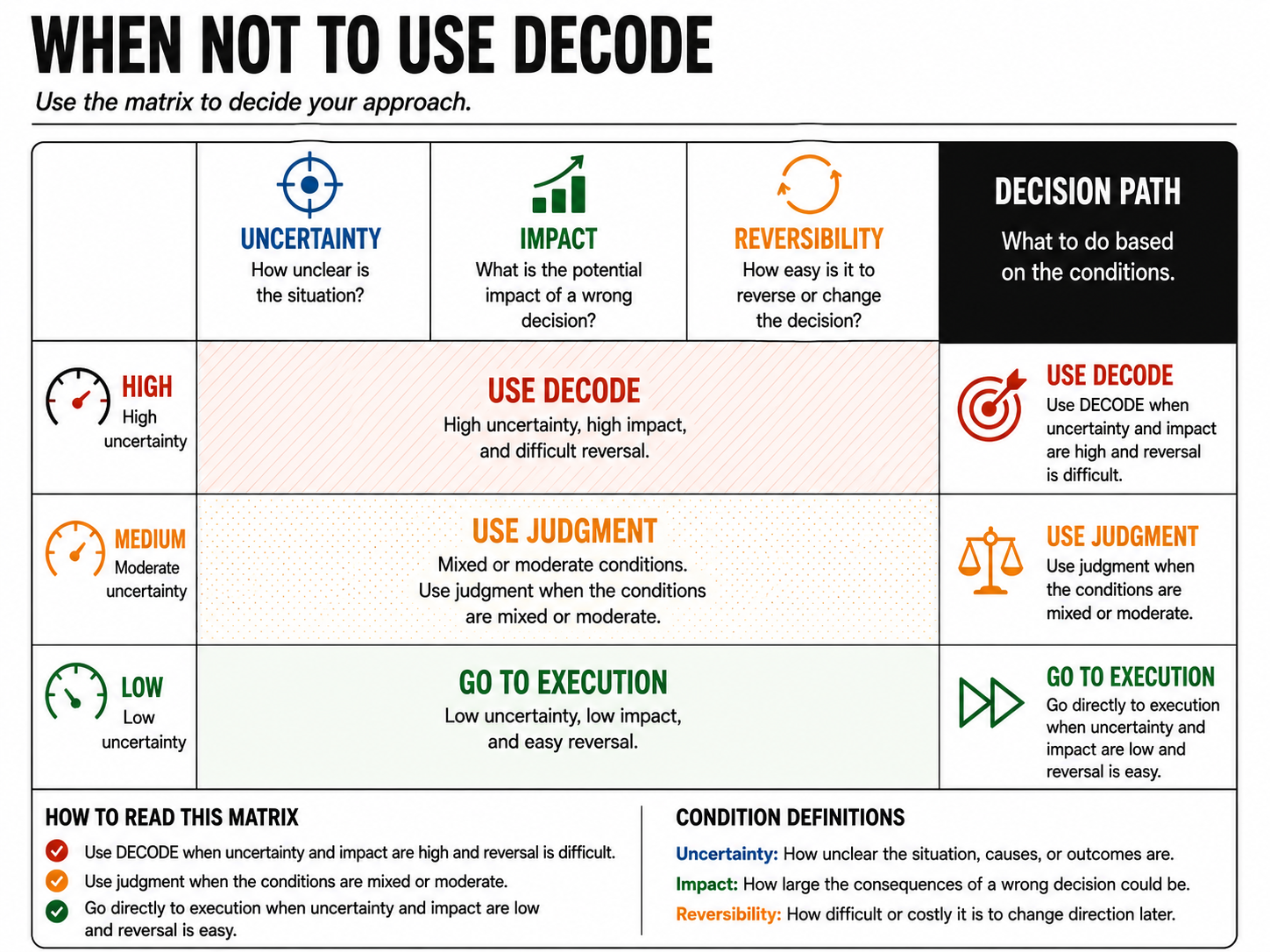
When Not to Use DECODE
Use DECODE when uncertainty and impact are high and reversal is difficult; otherwise, use judgment or proceed directly to execution.

The Six Letters
DECODE moves from structured understanding to explicit commitment and closure.
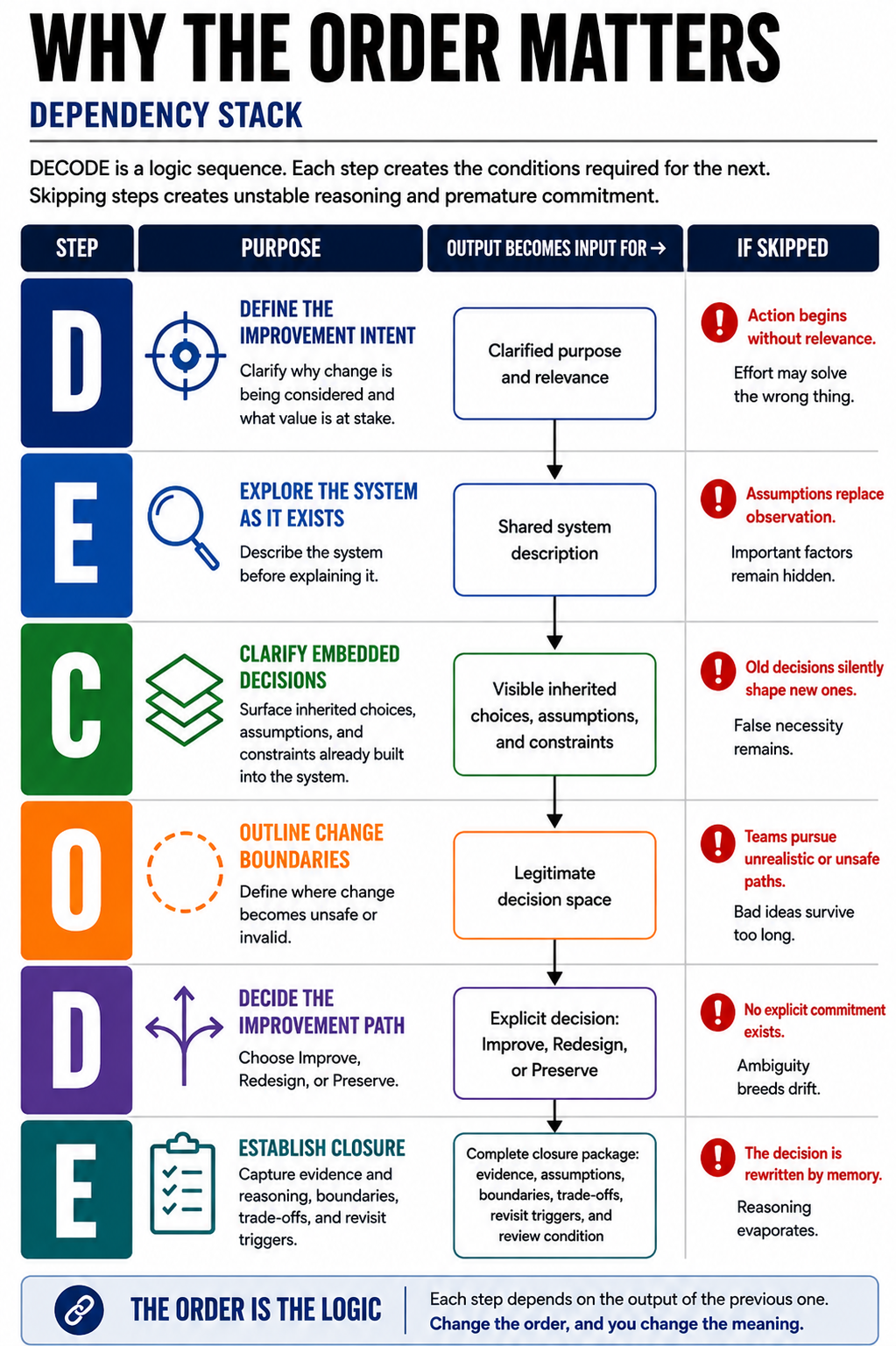
Why the Order Matters
Each DECODE step creates the conditions required for the next, preventing unstable reasoning and premature commitment.

DECODE Is Not a Cycle
DECODE closes the decision before iterative execution and continuous improvement begin.
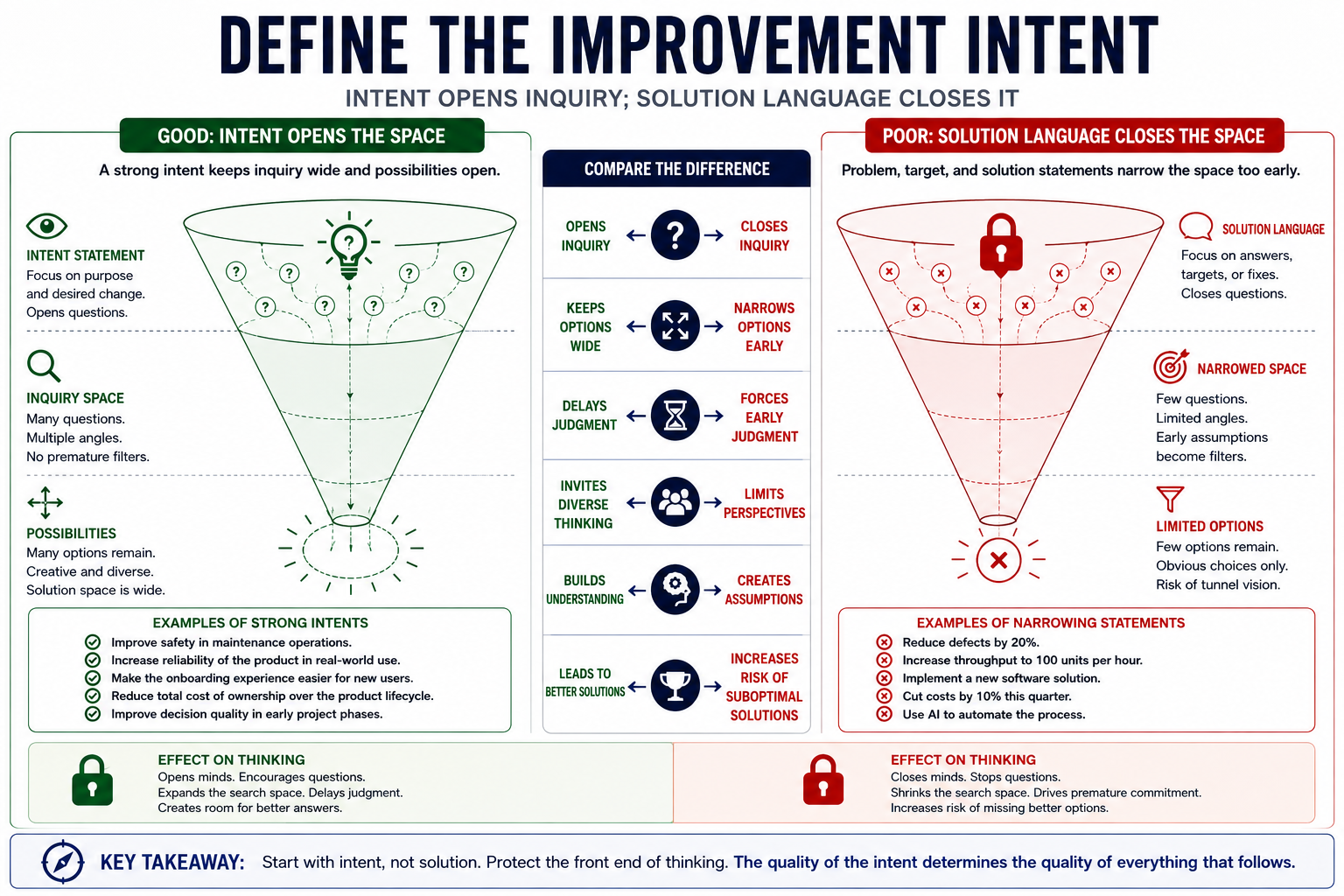
Define the Improvement Intent
Intent keeps inquiry open, while problem, target, and solution language narrow the decision space too early.
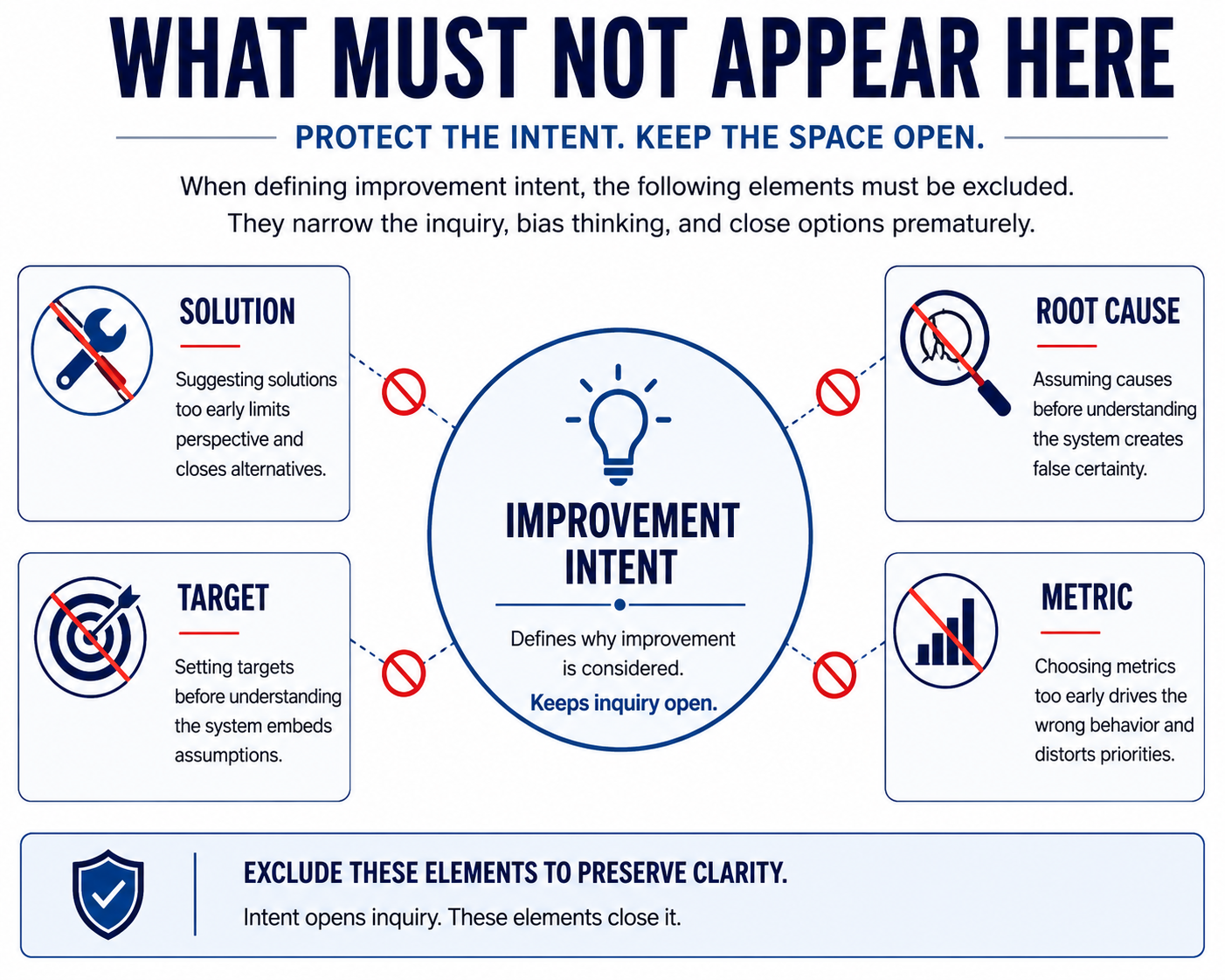
What Must Not Appear Here
Excluding solutions, root causes, targets, and metrics keeps the improvement intent open and unbiased.

Explore the System as It Exists
Describe observable elements, interfaces, and context before introducing explanations, assumptions, or judgments.
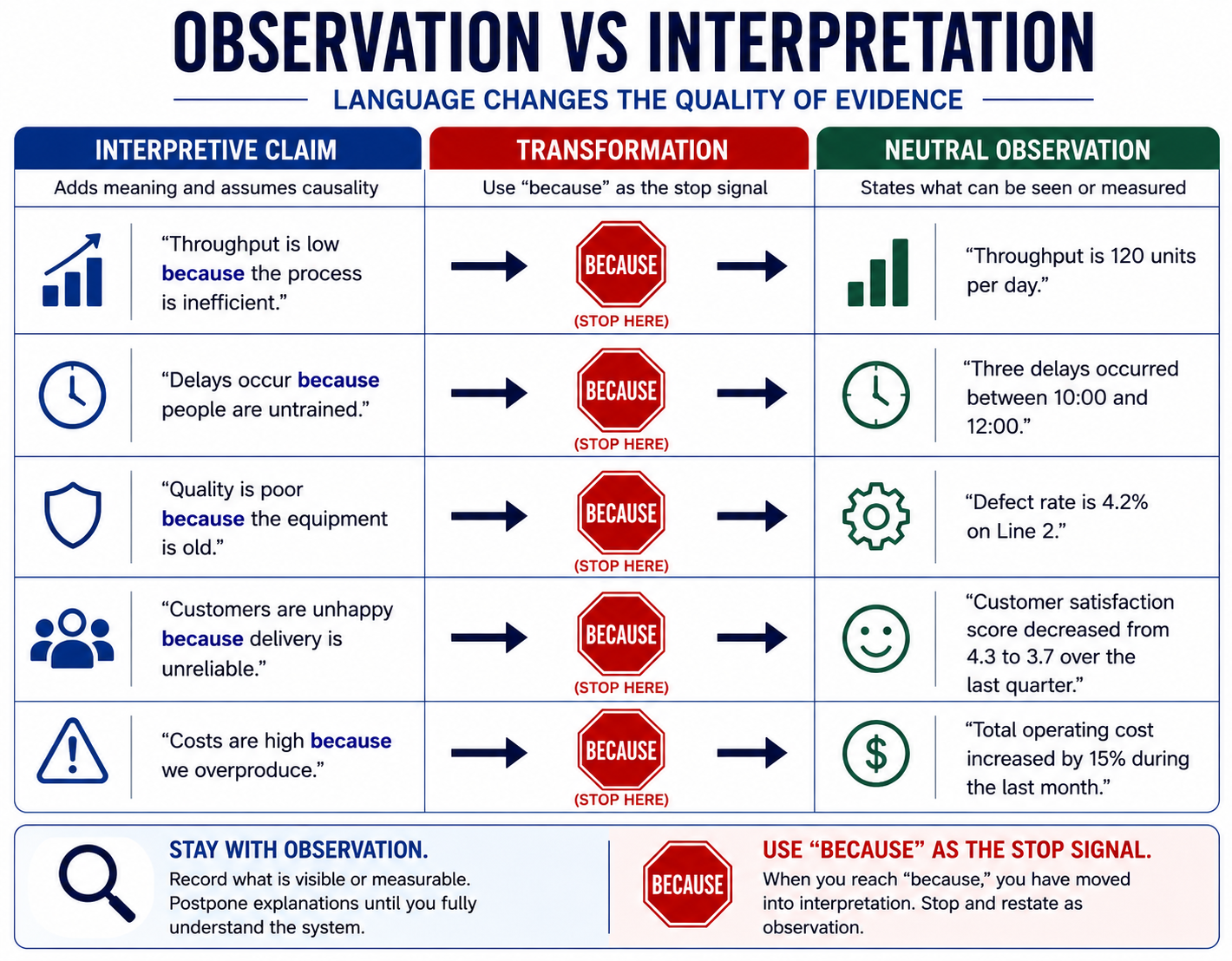
Observation Versus Interpretation
Use “because” as the stop signal and restate interpretive claims as neutral, observable evidence.

Clarify Embedded Decisions
The visible system is shaped by intentional, inherited, constraint-driven, and accidental decisions buried beneath the current state.

False Necessity
Decomposing an apparently fixed constraint reveals what is truly non-negotiable, what can be retested, and what can be changed.
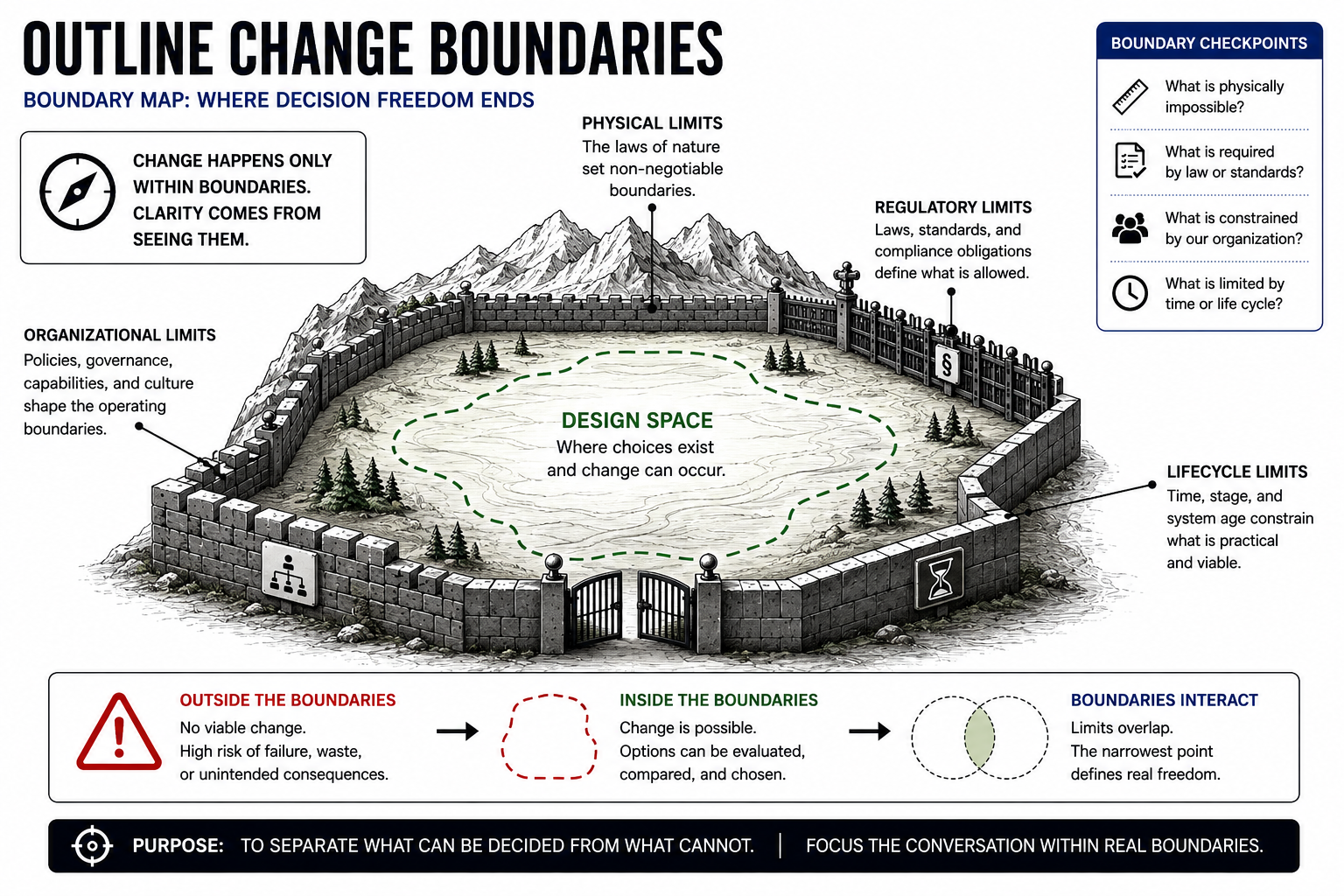
Outline Change Boundaries
Physical, regulatory, organizational, and lifecycle limits define where decision freedom ends and where viable change remains possible.

Hard Versus Soft Boundaries
Hard boundaries must be respected; soft boundaries reflect current capability and can be challenged or expanded.

Decide the Improvement Path
Choose to improve within the current boundaries, redesign the system beyond them, or preserve the current state when change is not justified.

Pilots Are Not a Decision
Choose Improve, Redesign, or Preserve first; use a pilot only as a downstream tactic to test assumptions, reduce risk, or support execution.
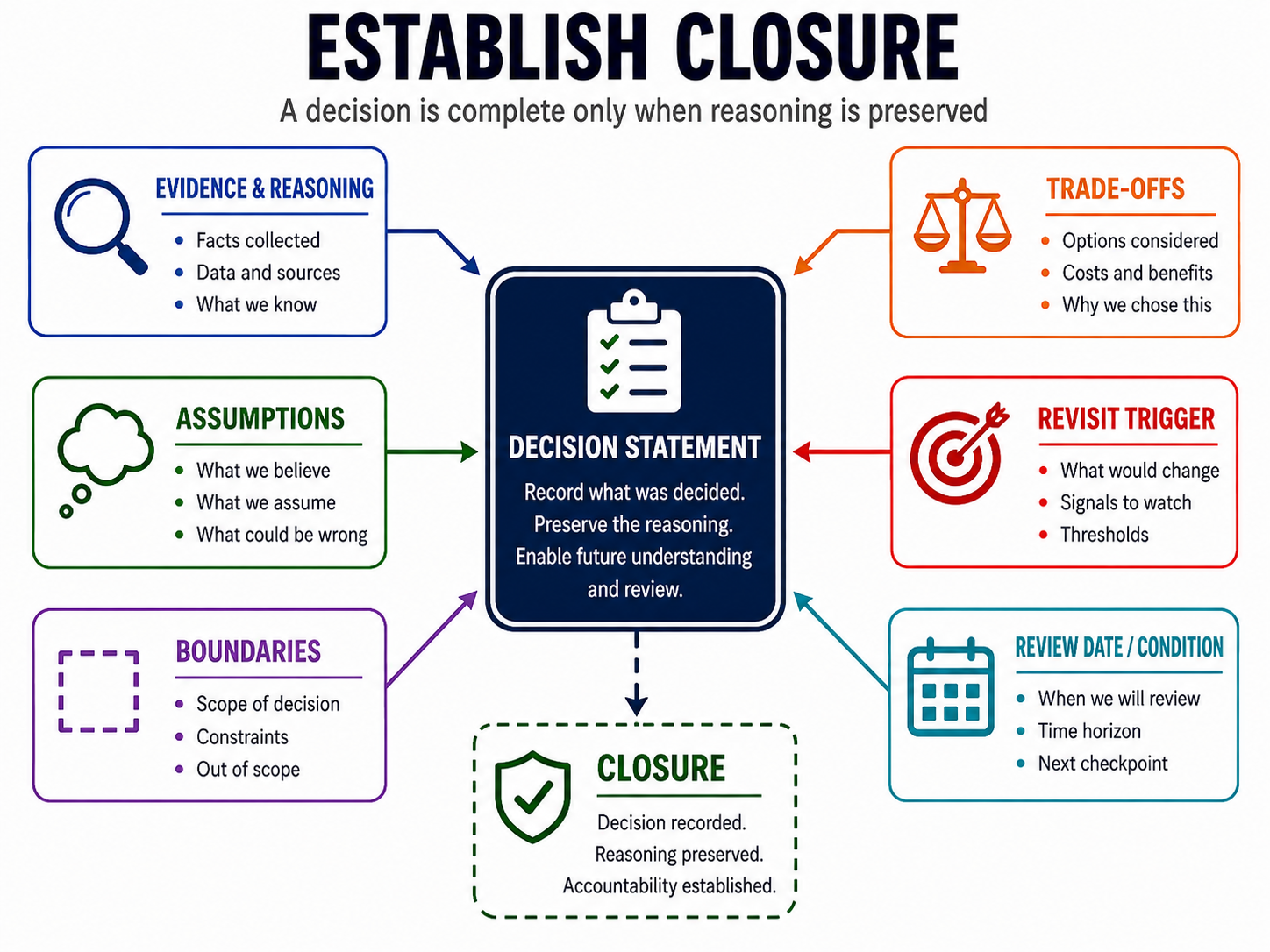
Establish Closure
A decision is complete only when its reasoning, assumptions, boundaries, trade-offs, and revisit conditions are preserved.
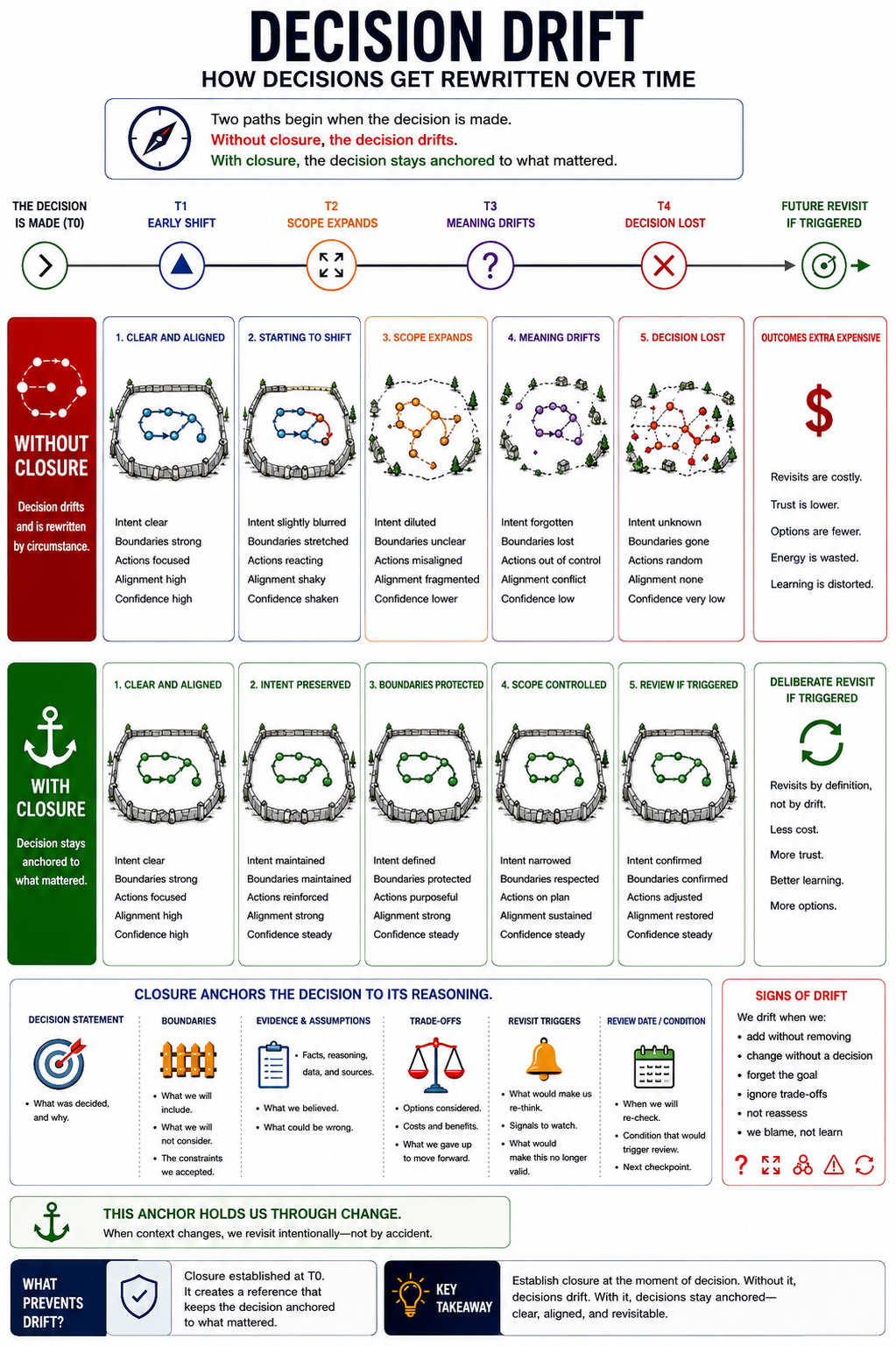
Decision Drift
Without closure, intent and boundaries fade as scope and action drift; preserved reasoning keeps the decision anchored over time.

DECODE in Practice
Facilitate the steps in order, park solutions until commitment is justified, use explicit gates, and close with a clear decision.

Where DECODE Applies
Use DECODE selectively across products, processes, organizations, and strategy when uncertainty is real, impact is significant, and reversal would be difficult.
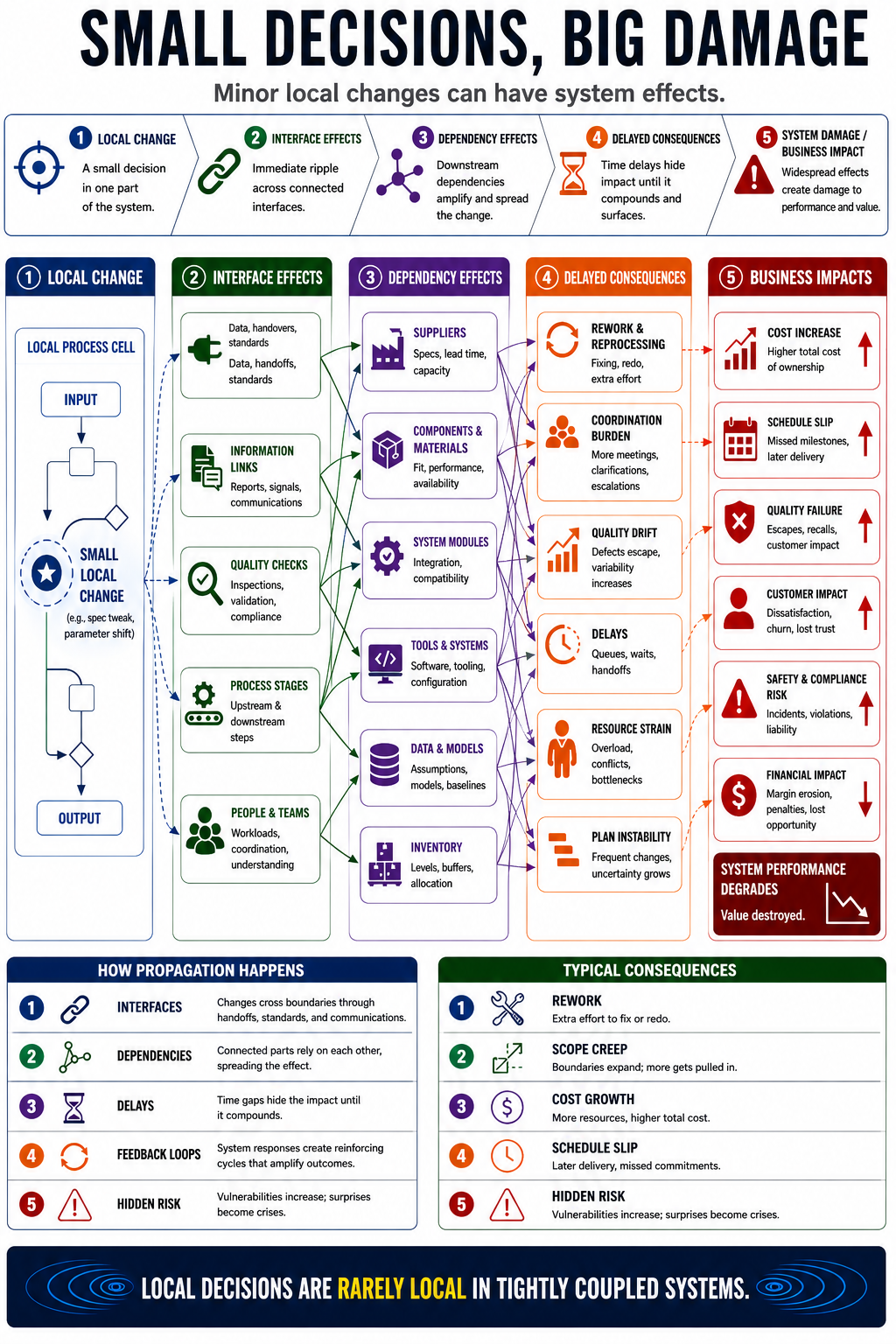
Small Decisions, Big Damage
A minor local change can propagate through interfaces, dependencies, and delays, creating widespread system consequences.
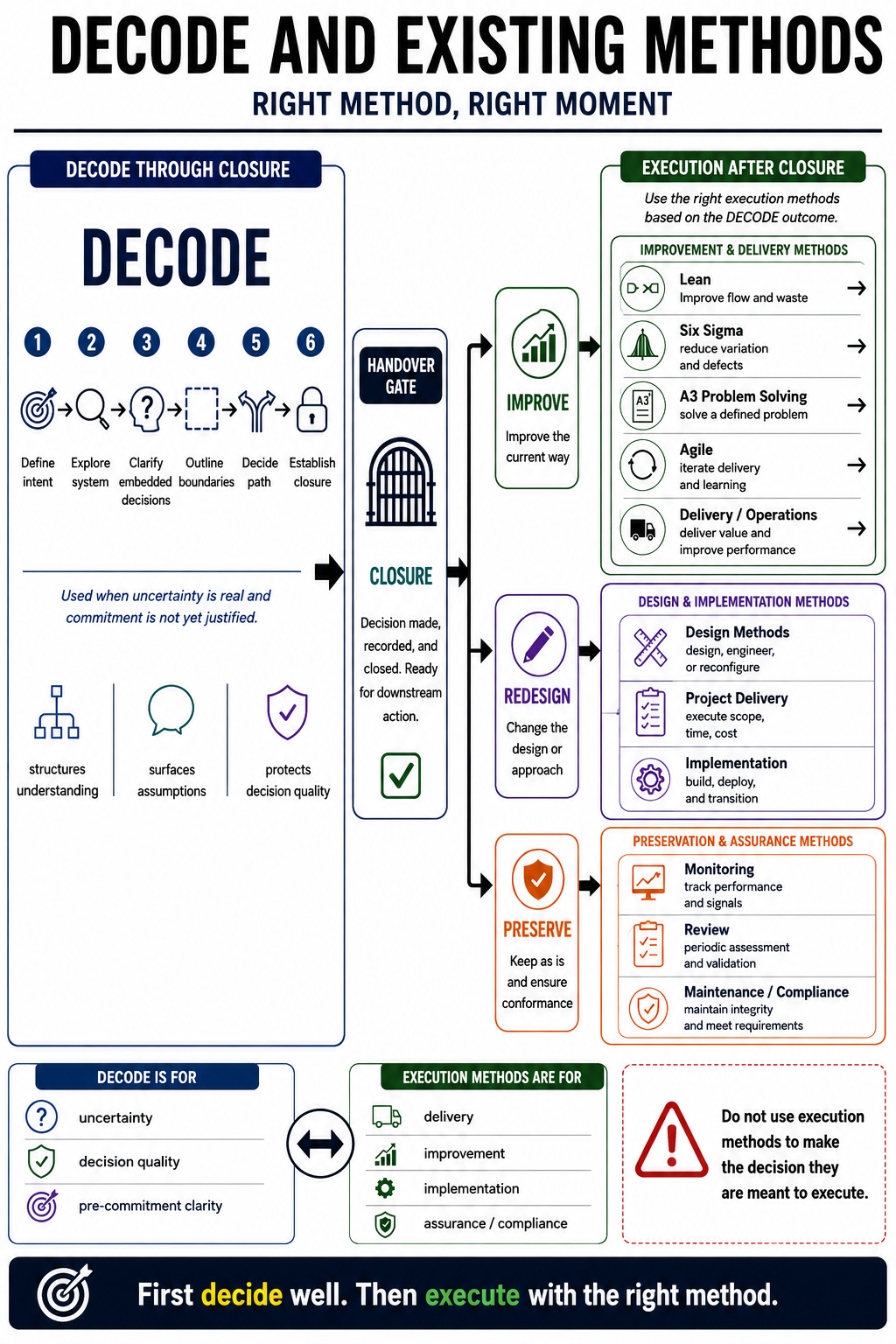
DECODE and Existing Methods
Use DECODE before commitment to establish a justified direction.

Decision Quality as a Capability
Decision maturity progresses from reactive choices to structured practice, shared language, preserved reasoning, and habitual organizational discipline.
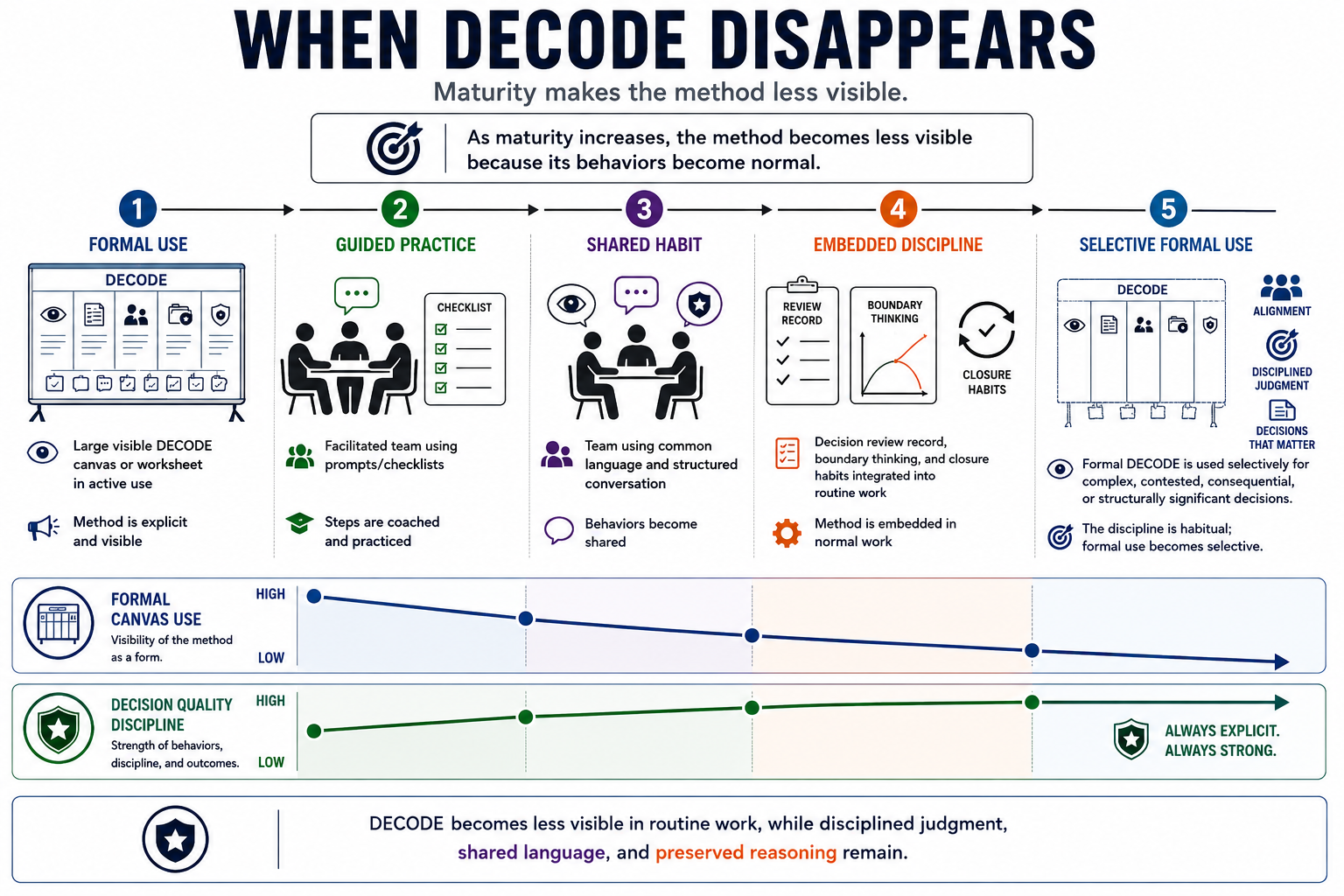
When DECODE Disappears
As decision maturity grows, routine reliance on the formal DECODE Canvas decreases while shared language, disciplined judgment, and preserved reasoning become embedded in everyday work.
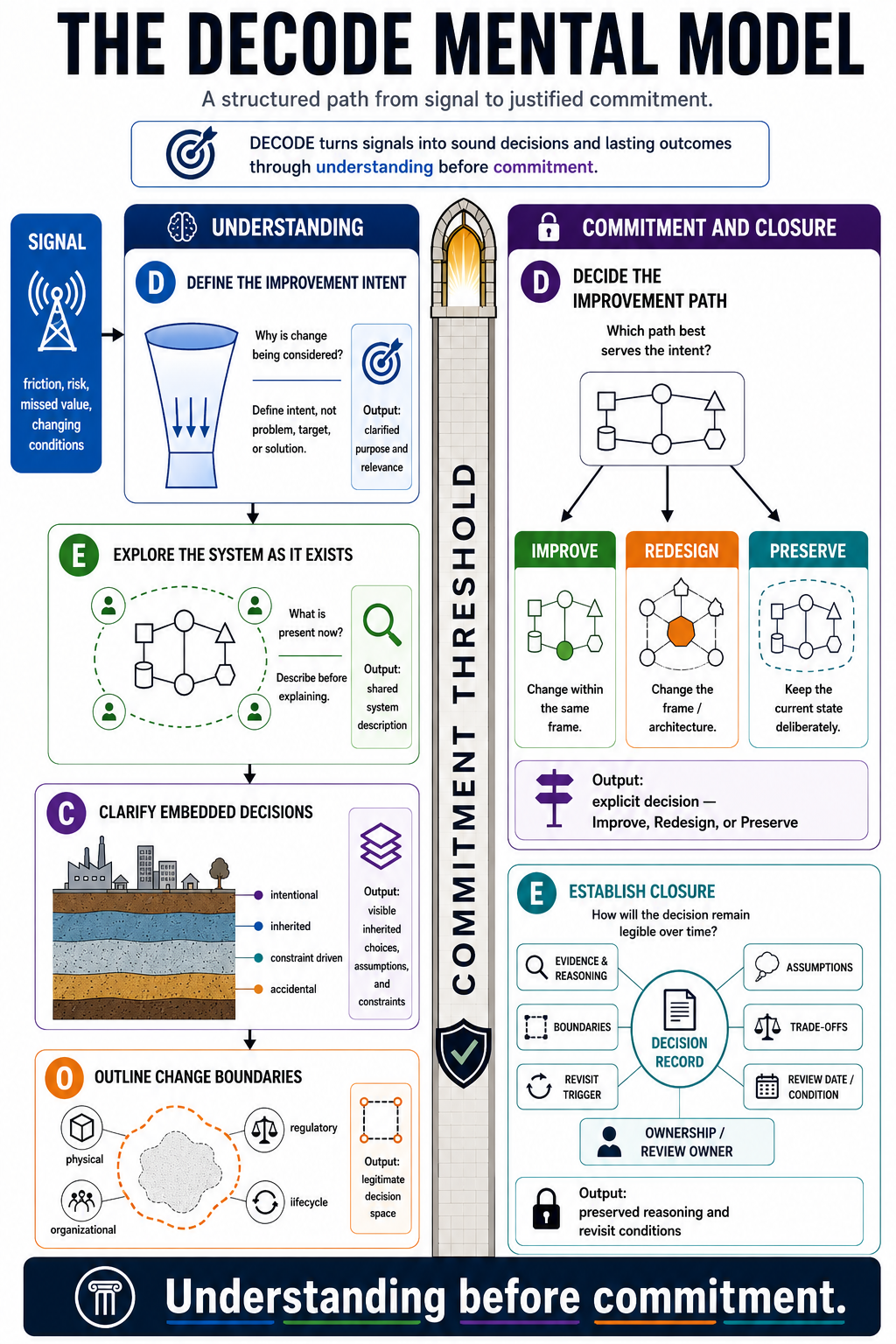
The DECODE Mental Model
DECODE moves from signal to justified commitment by structuring intent, system understanding, embedded decisions, boundaries, path, and closure into one coherent logic.
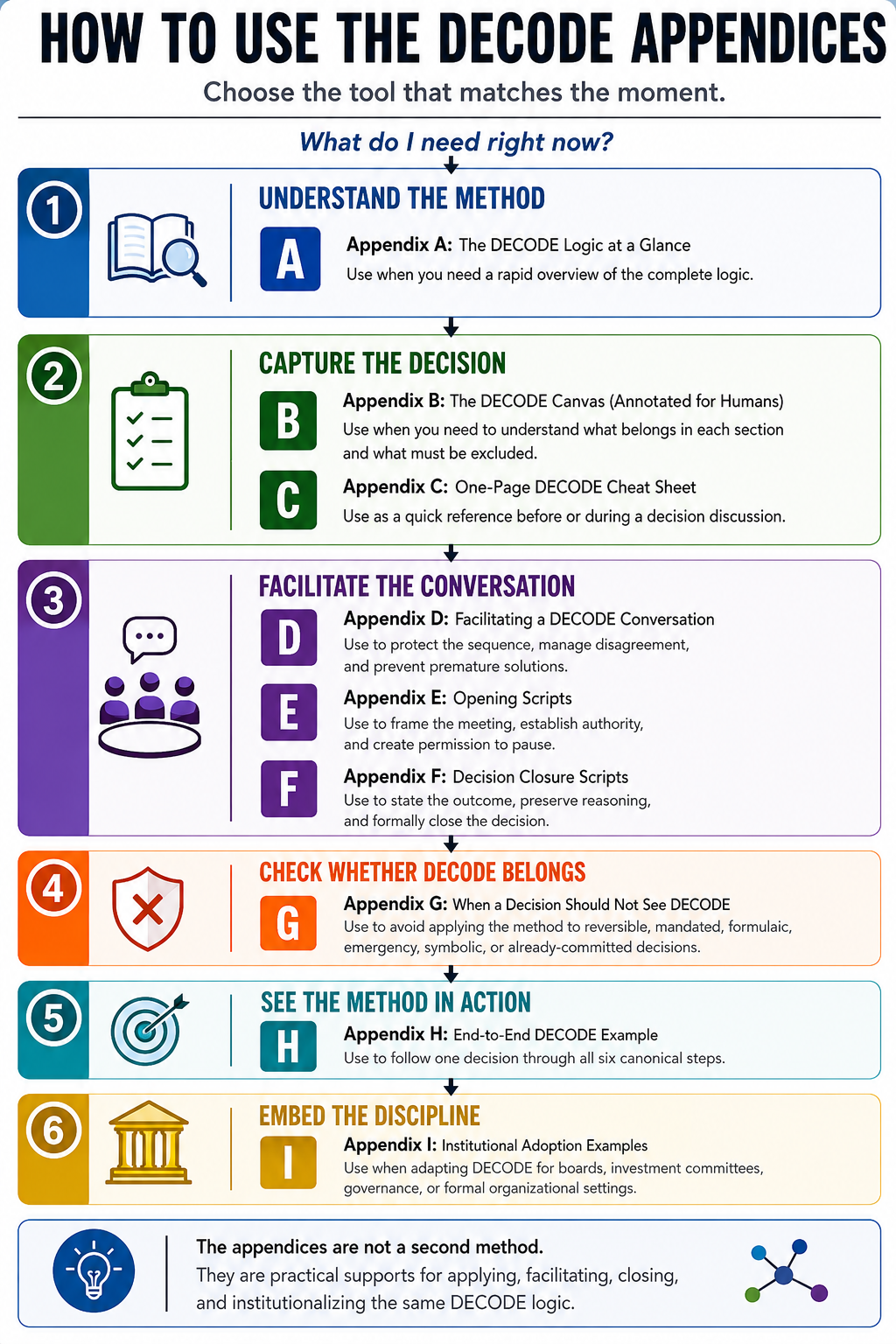
How to Use the DECODE Appendices
A practical visual reference from the DECODE appendices.
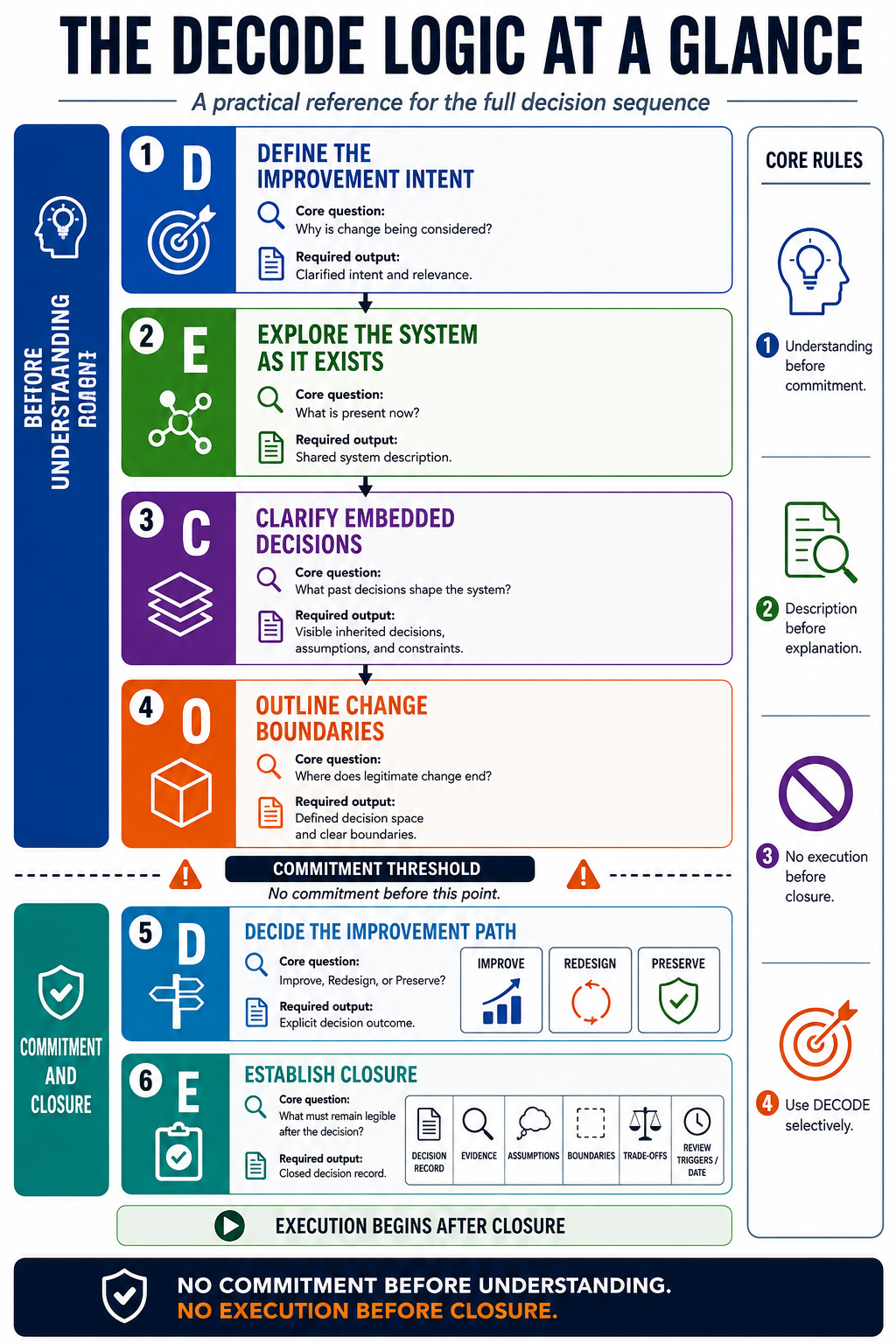
The DECODE Logic at a Glance
A practical visual reference from the DECODE appendices.
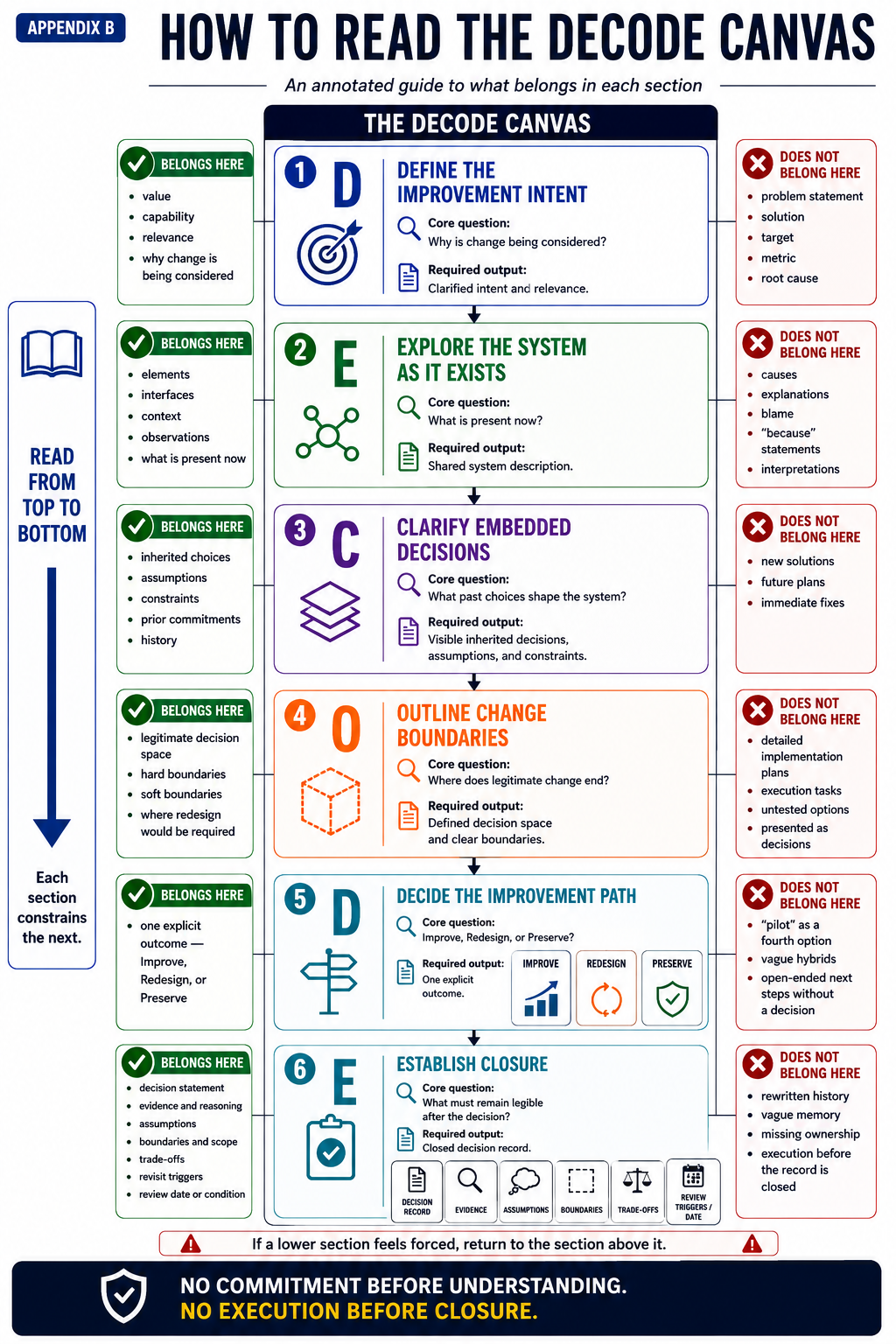
How to Read the DECODE Canvas
A practical visual reference from the DECODE appendices.
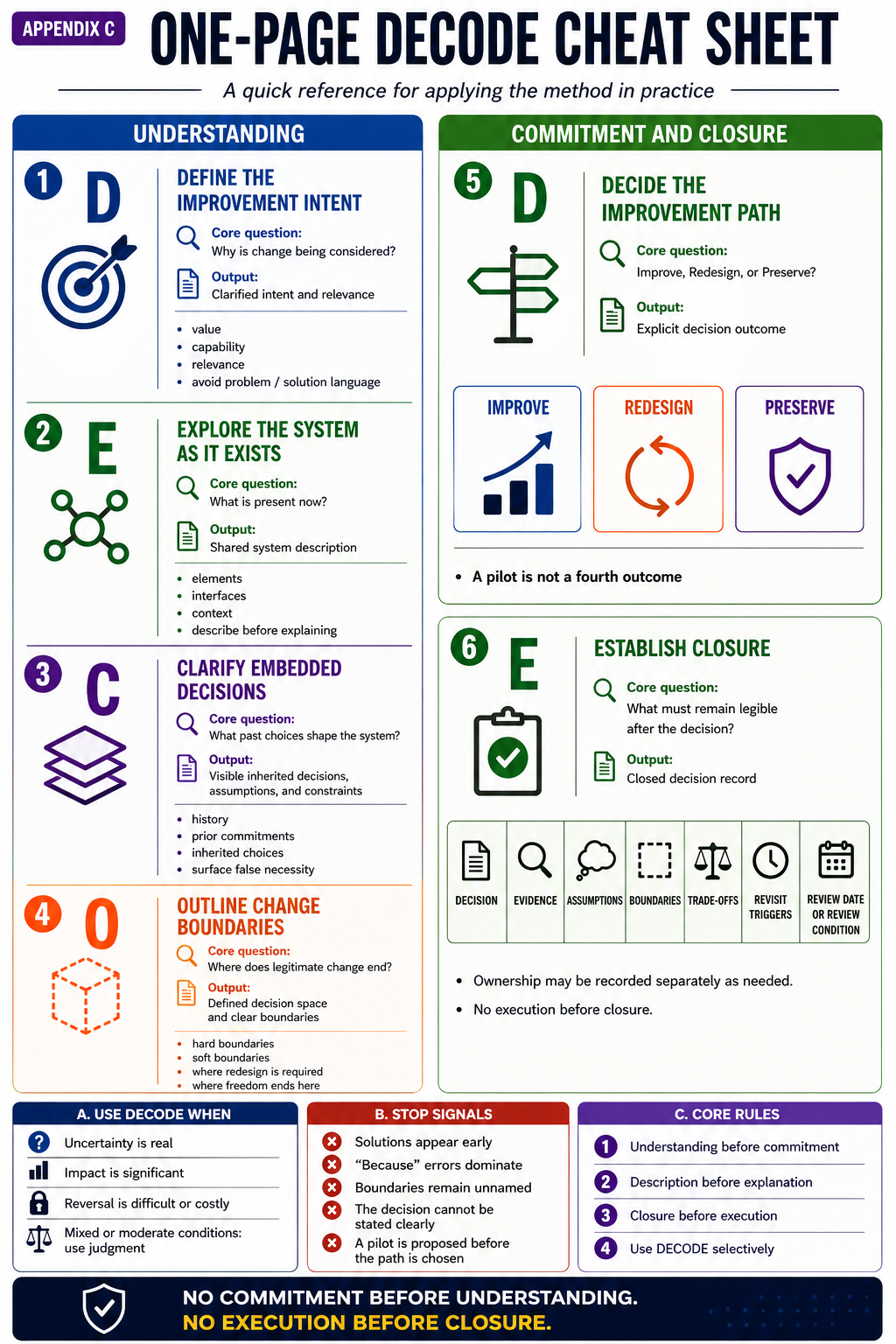
One-Page DECODE Cheat Sheet
A practical visual reference from the DECODE appendices.
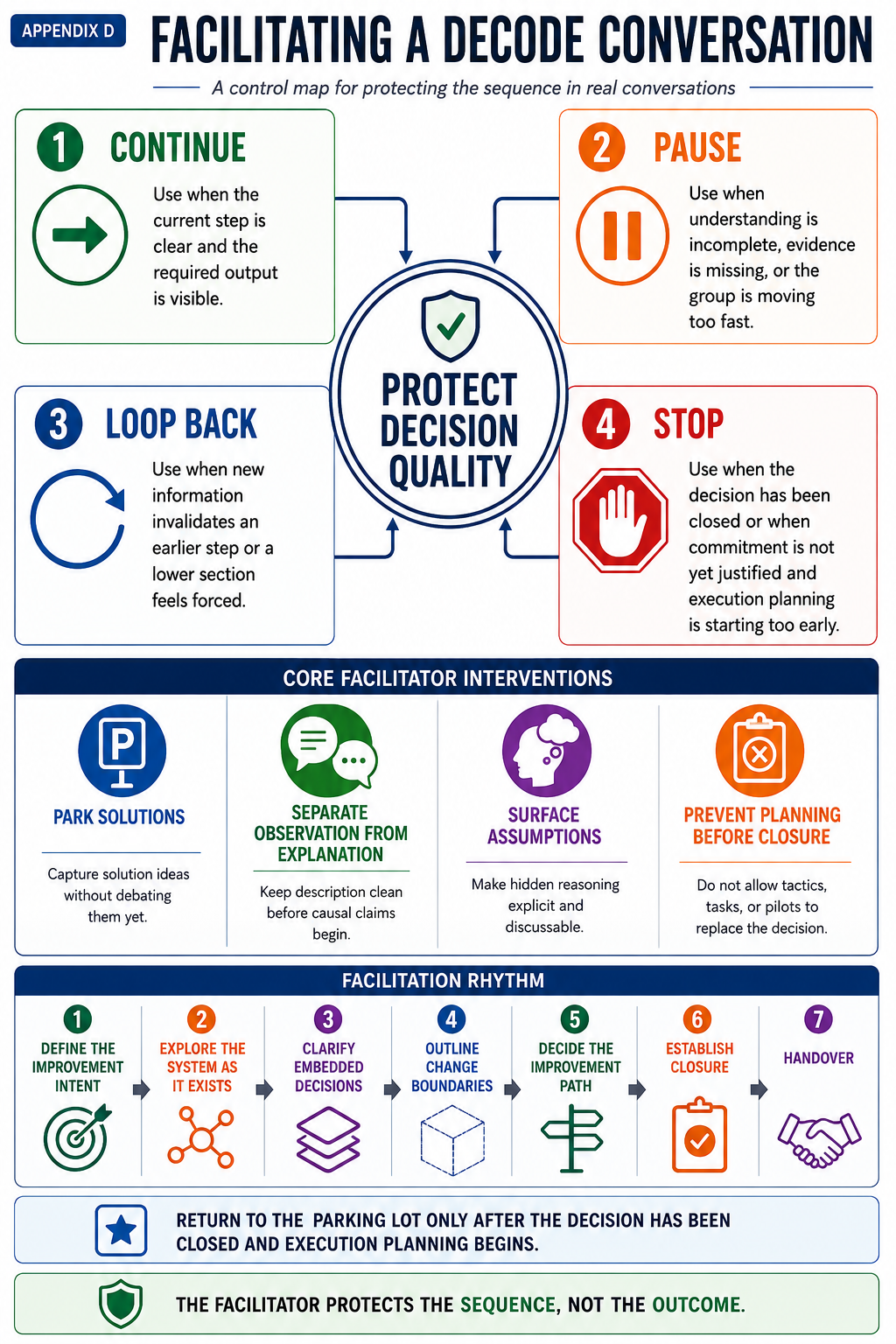
Facilitating a DECODE Conversation
A practical visual reference from the DECODE appendices.
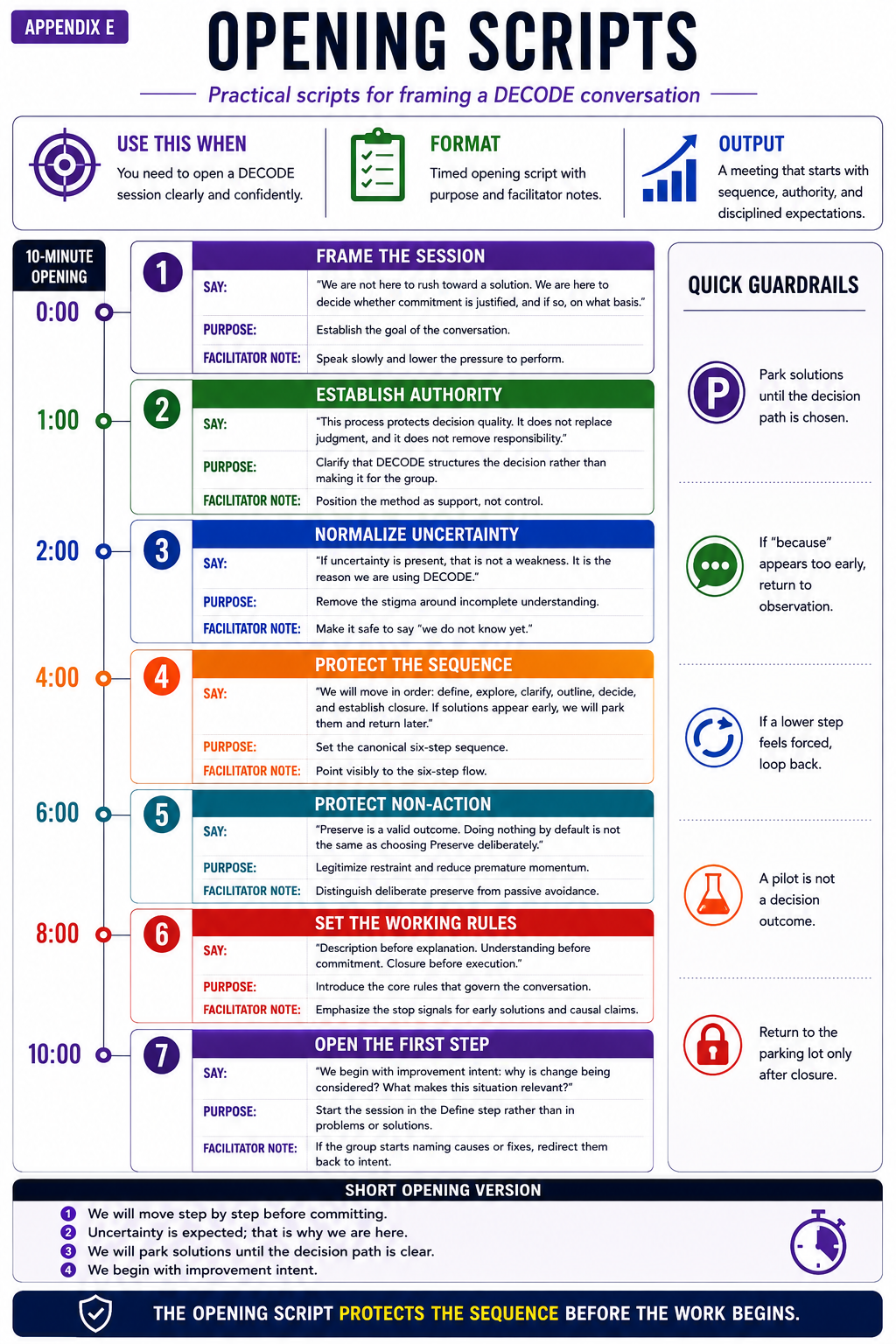
Opening Scripts
A practical visual reference from the DECODE appendices.
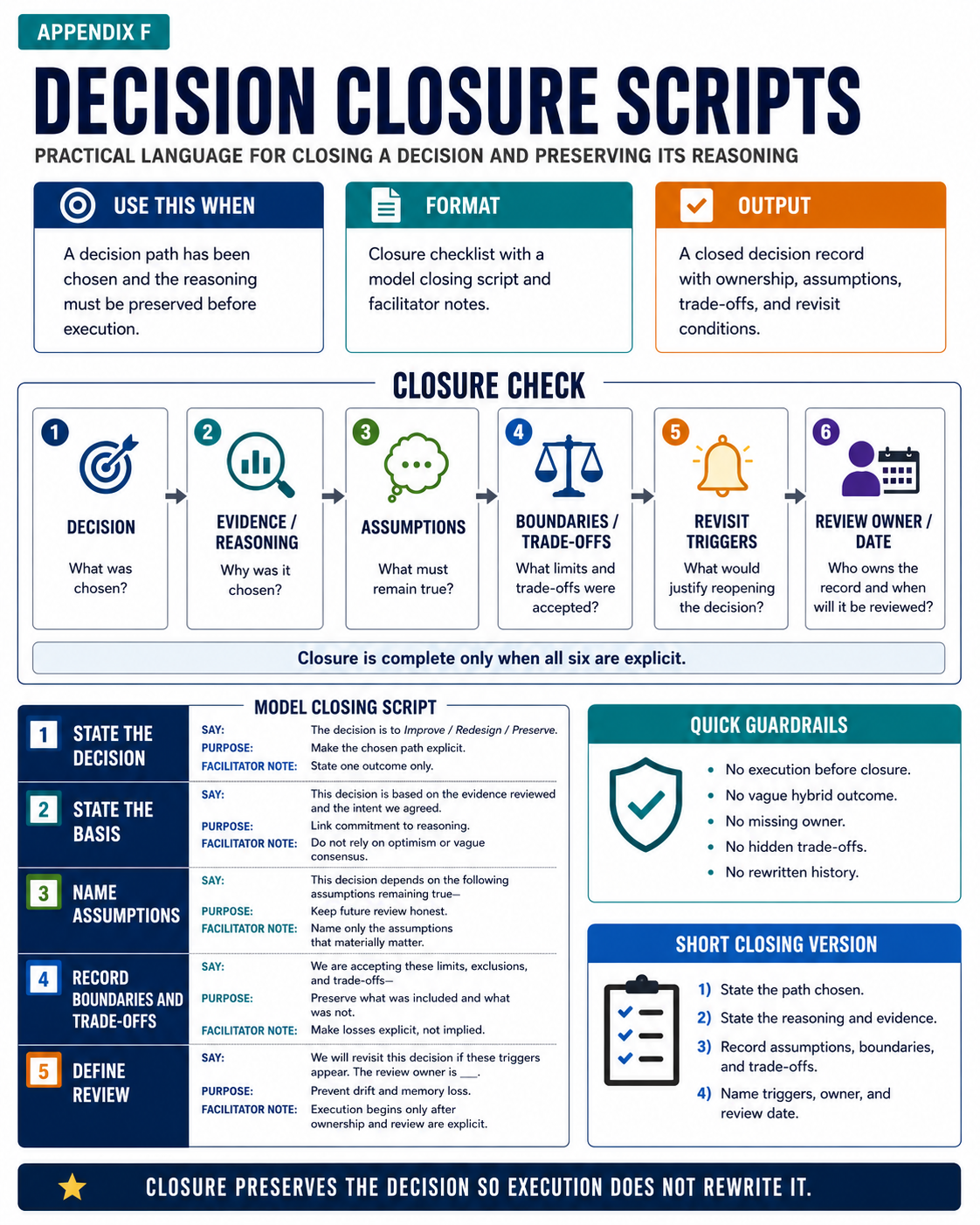
Decision Closure Scripts
A practical visual reference from the DECODE appendices.
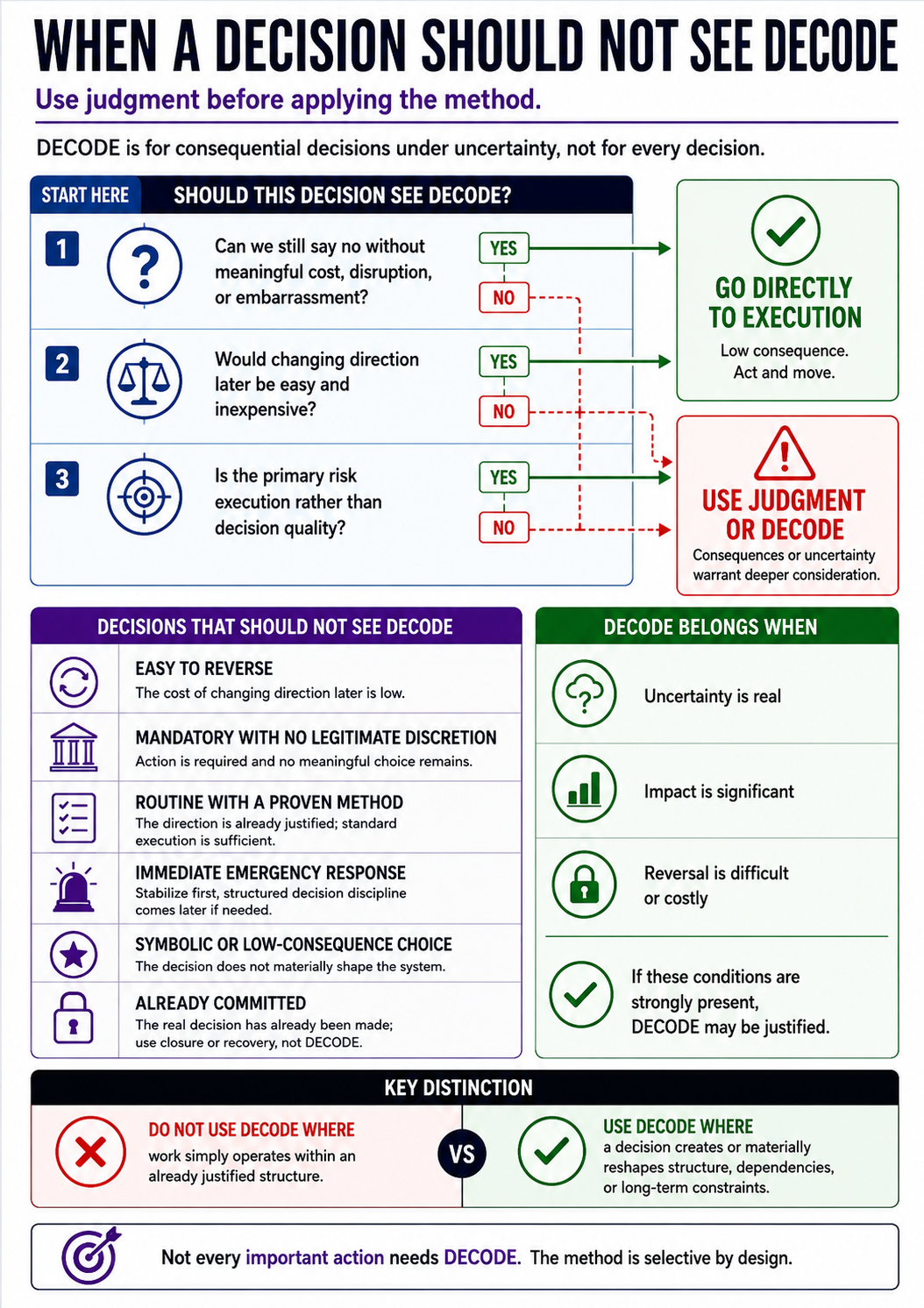
When a Decision Should Not See DECODE
A practical visual reference from the DECODE appendices.
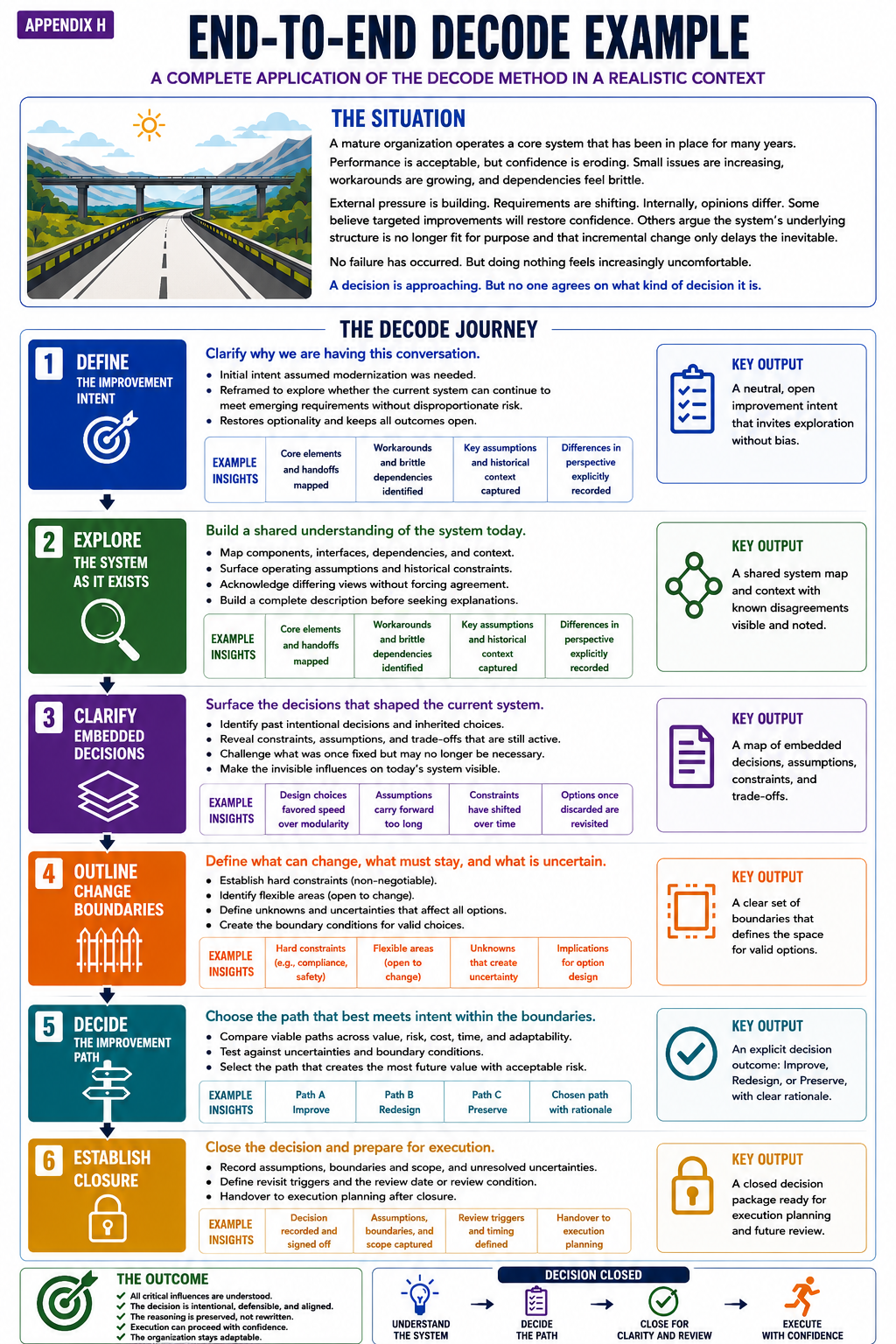
End-to-End DECODE Example
A practical visual reference from the DECODE appendices.
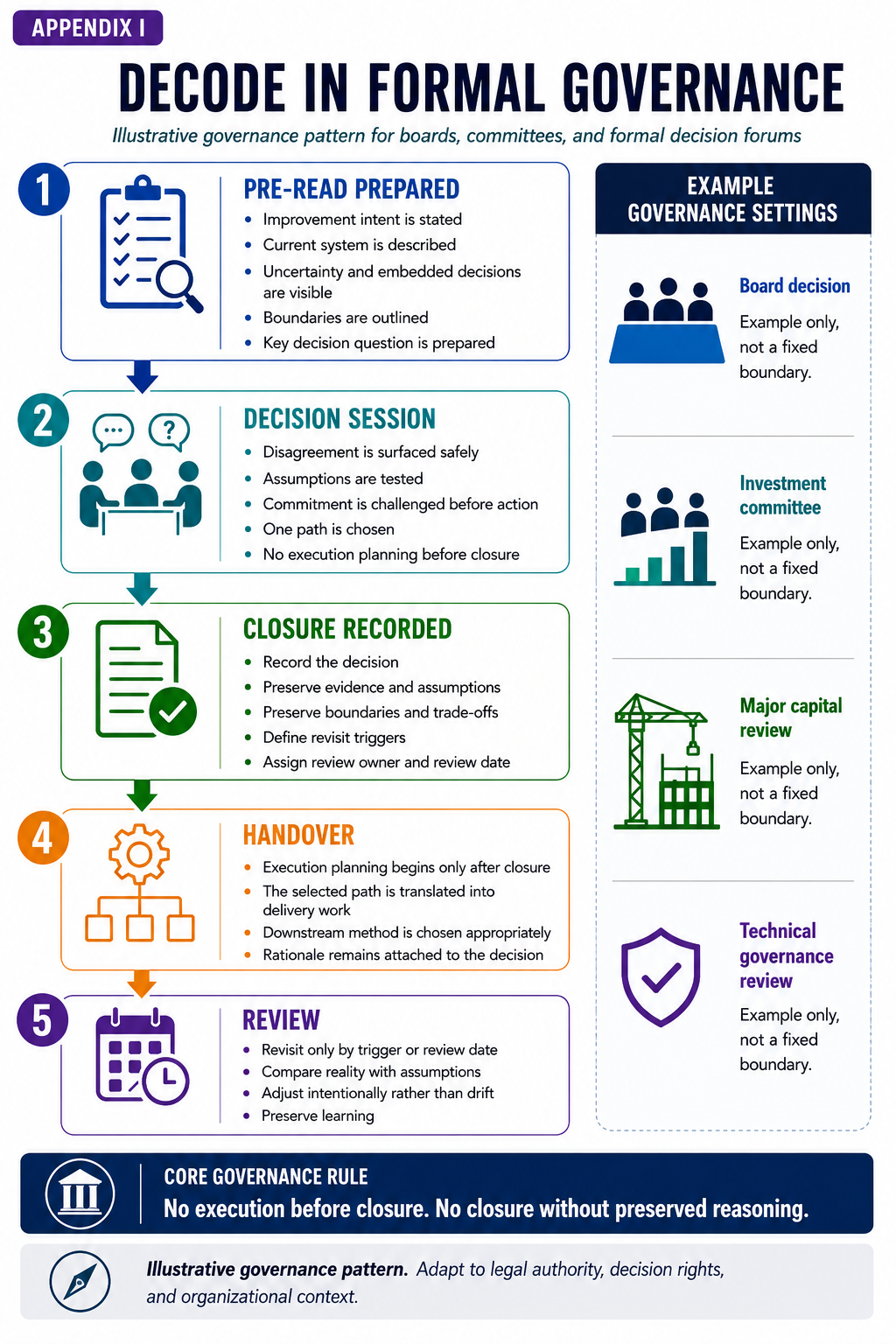
DECODE in Formal Governance
A practical visual reference from the DECODE appendices.
Complete visual atlas
Every book visual, connected to its context.
The library includes numbered figures, the introductory visual, and appendix materials. Each visual links to the chapter or appendix where its ideas are explained in full.
Questions or feedback? imesarec@decode-method.com →